

Last updated September 20, 2026
Free on-site gate assessment - hinges, posts, and your LiftMaster or Nice gate operator checked before anything is quoted
The assessment is free and the quote is the invoice.


 Before
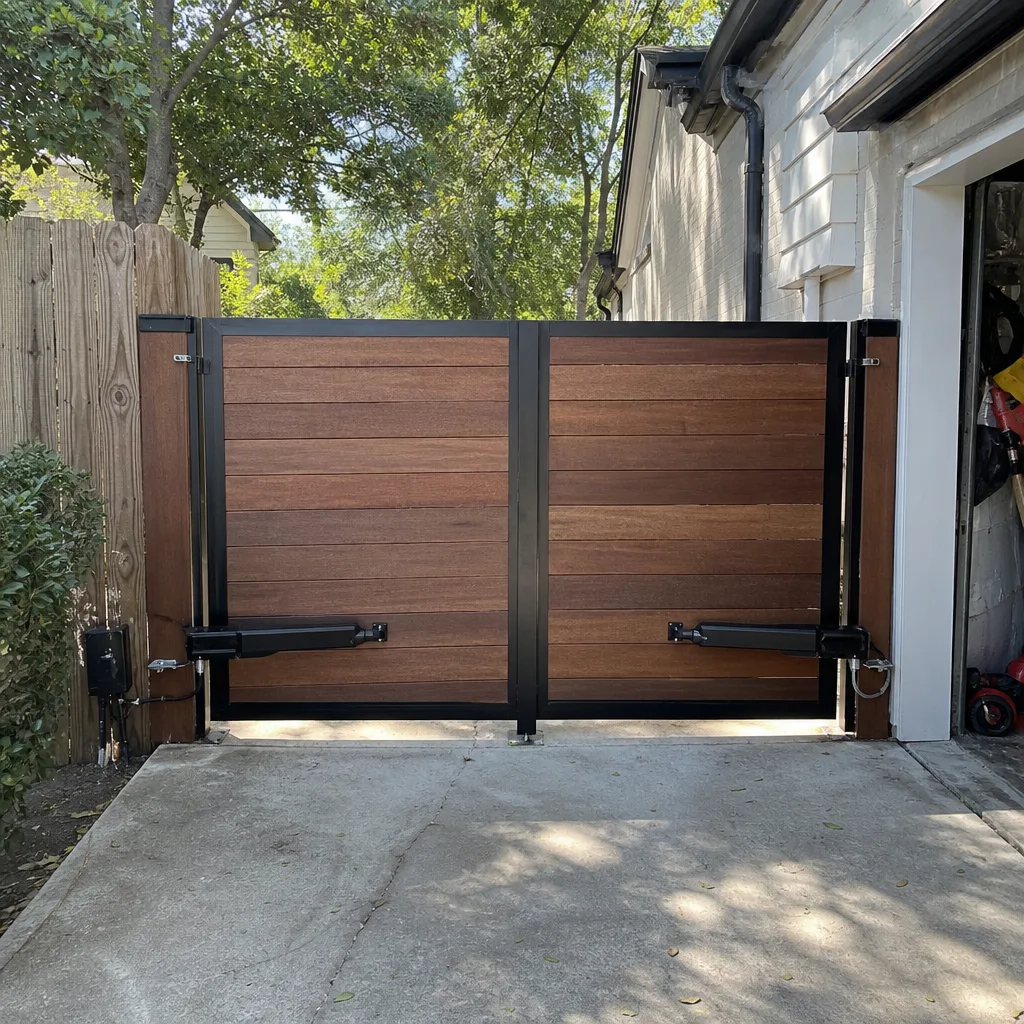 After
After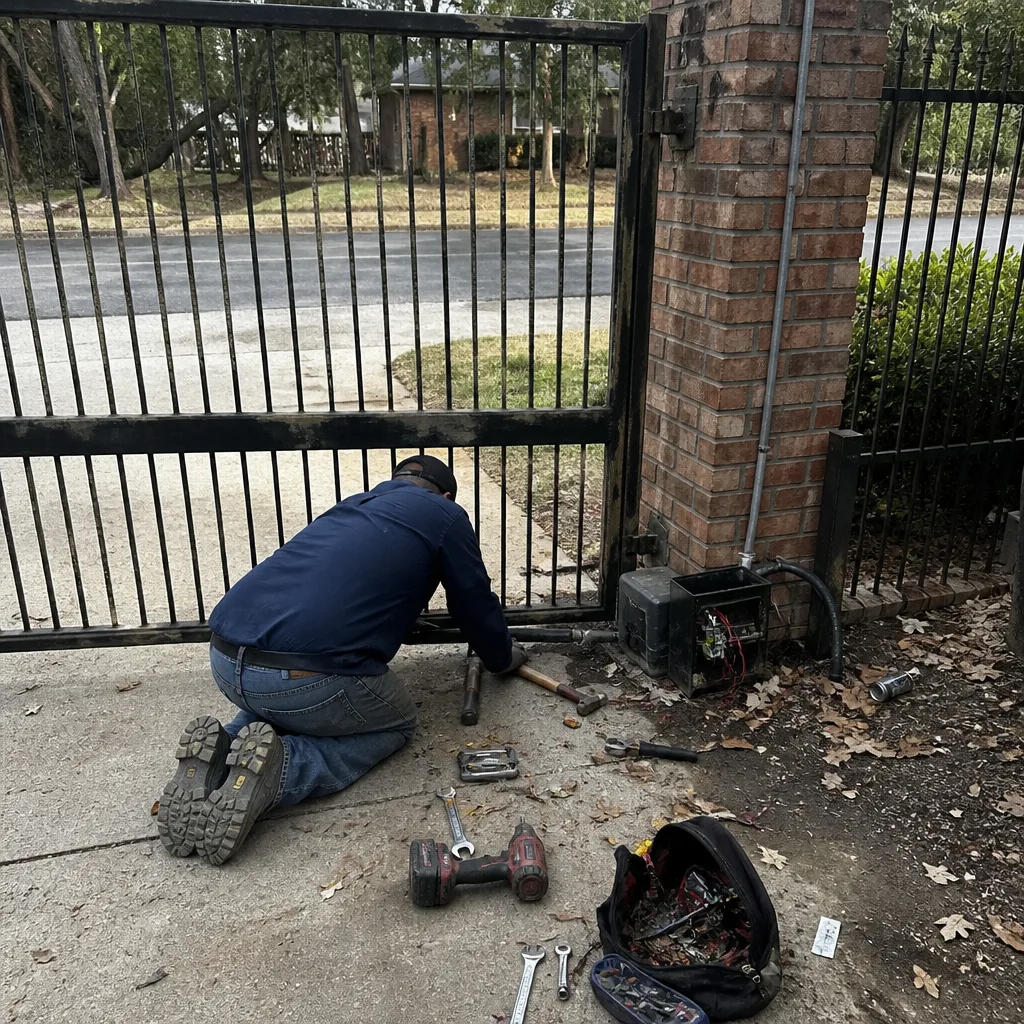 Before
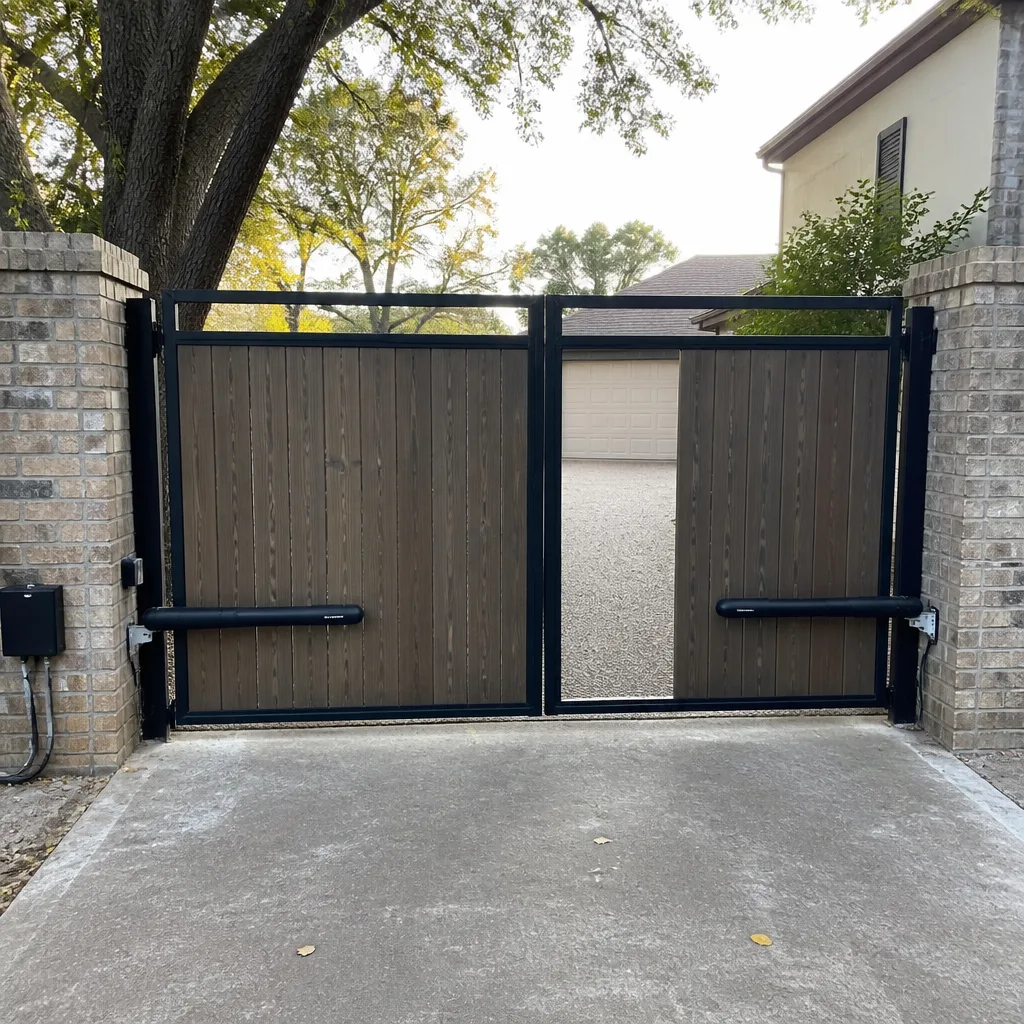 After
After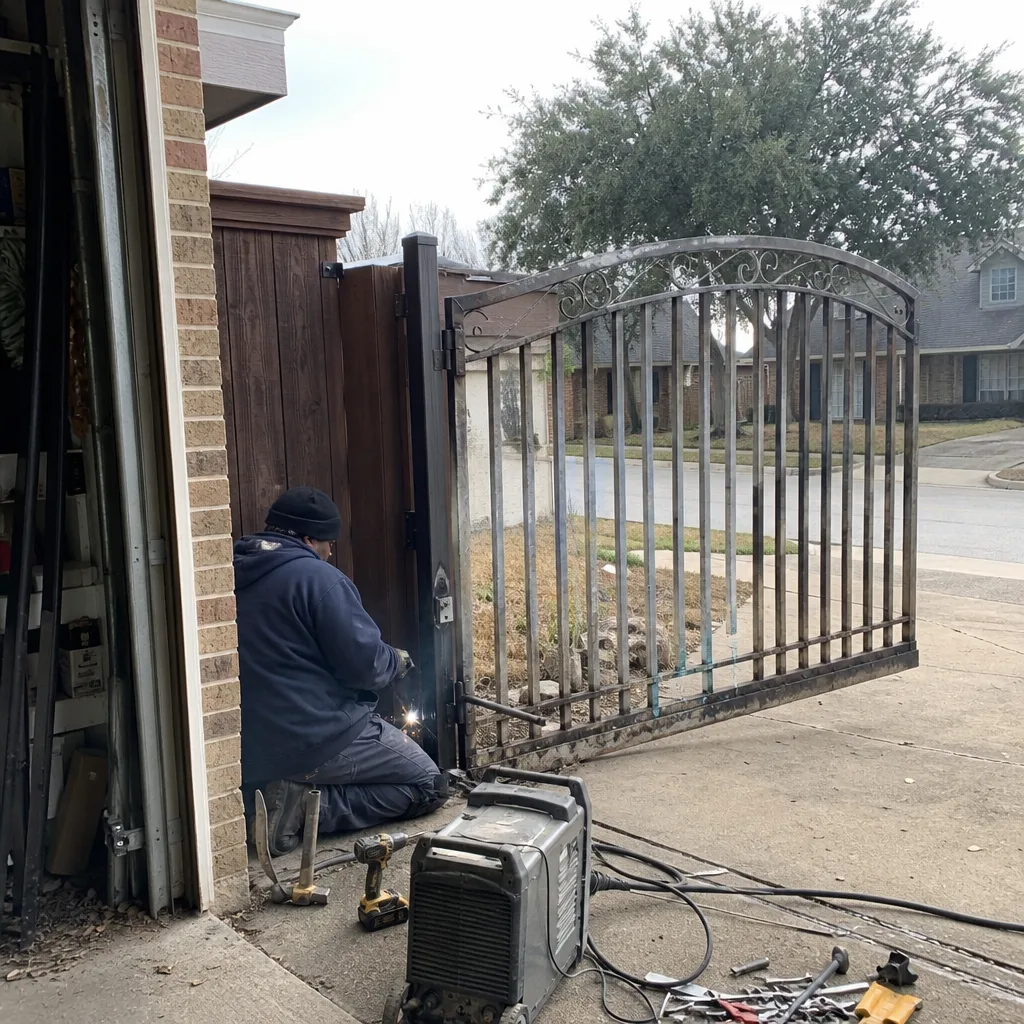 Before
 After
AfterSeasonal Gate Repair Care for Dallas: Year-Round Homeowner’s Guide
Ask a Dallas homeowner what kills driveway gates and most will point to the August heat. They’re half right. The truth, based on what we pull out of gate motors across this city every spring, is that the February ice event does more cumulative damage in three days than an entire Dallas summer does in three months. A motor pushing against a frozen track runs at stall current, and stall current burns windings even after the gate thaws and moves again. This guide lays out the two distinct protocols a Dallas gate actually needs: one built around sustained heat degradation, one built around freeze-thaw damage. For a deeper dive, see The Complete Guide to Gate Repair in Dallas. By the end, you’ll know what to check each season, what normal operation should sound like, and which symptoms mean the clock is already ticking on a larger failure.
Quick Answer
Seasonal gate care in Dallas means running two protocols, not one. From April through October, focus on heat management: shade and ventilation for the control board, battery load testing before August, and lubricant reapplication every 90 days because sustained 100-degree heat thins grease faster than any other condition. From November through March, focus on cold-weather stress: weather seal inspection after each freeze event, limit switch verification once the ice clears, and battery backup testing before the shortest daylight months. A homeowner who follows both protocols typically gets 7-10 years from a quality gate motor in Dallas; a homeowner who runs a single year-round routine typically gets 4-6 before a winding failure or control board burn-out forces a replacement.
Table of Contents
- Dallas Has Two Gate-Killing Seasons, Not Four
- The August Pre-Check: Heat Protocol Before It Peaks
- Freeze Damage: What Ice Does to Limit Switches and Seals
- Spring Realignment After the Clay-Soil Freeze-Thaw Cycle
- Fall Electrical Check: Battery Backup Before Short Days
- What Normal Operation Sounds Like in Each Season
- Common Mistakes to Avoid
- When to Call a Professional
- Frequently Asked Questions
- The Bottom Line
BeforeAfterDallas Has Two Gate-Killing Seasons, Not Four
Most gate maintenance advice gets written for places with a gentler climate, and it fails in Dallas for a simple reason: this city doesn’t have four mild seasons. It has a long heat event and a short, sharp ice event, and those two conditions stress completely different parts of the gate system.
The summer protocol targets electronics and lubricants. Dallas regularly sees 100-plus days of 95-degree ambient heat, and the inside of a metal operator housing runs hotter, often 120 to 140 degrees. That sustained heat does two things that show up on almost every service call we run between July and September: it degrades electrolytic capacitors on control boards, and it turns lithium grease into a thin oil that migrates off the rack and chain. Capacitor degradation shows up as intermittent operation first, a gate that works at 7 a.m. and refuses at 3 p.m., because the board can’t hold a stable charge when the housing is heat-soaked. Thin lubricant shows up as accelerated rack wear, because metal starts running on metal within weeks of the grease thinning out.
The winter protocol targets seals and motor windings. Dallas doesn’t get many freeze events, but the ones it gets are wet freezes: rain falls near 34 degrees, temperatures drop overnight, and water that has already worked into hairline seal gaps expands by 9 percent as ice. That expansion cracks weather seals, warps guide tracks by a few millimeters, and sometimes freezes the gate leaf to its own wheels or to the ground. The motor doesn’t know any of this. It just feels a load spike and draws more current. Gate repair in Dallas calls spike in February not because gates stopped moving, but because motors that fought through the ice for three days start making a humming noise in March. The windings took thermal damage when the motor was running at or near stall.
Here’s the layering that makes Dallas unique, based on what we document across the city every year:
- Summer heat and winter freeze are not equal risks. Heat failure is slow and visible; freeze failure is fast and hidden.
- The freeze event is the compounding agent. A motor weakened by three summers of heat degradation is the motor that fails during the first ice event, not a healthy one.
- Clay soil makes it worse. Dallas sits on expansive clay that shrinks in drought and swells after rain. A concrete gate post set in that soil moves through the year, and a freeze event accelerates the movement in a single week.
- The protocol has to be seasonal, not annual. An annual inspection done in April won’t catch the August heat damage. An annual inspection done in October won’t catch the February freeze damage before it happens.
That’s why this guide is structured around two protocols, each with its own calendar window, its own checklist, and its own early-warning signals. It’s the same approach we use when we run our Gate Repair services on gates across Dallas, and it’s the approach the rest of this guide walks through step by step.
The August Pre-Check: Heat Protocol Before It Peaks
The smartest thing a Dallas homeowner can do for a gate motor is schedule a heat-protocol service call in early August, before the sustained peak heat of late August and early September. By mid-August, most gate failures we respond to are already advanced: the board has already been heat-cycling for weeks, the grease is already gone from the rack, and what started as a $150 service call has become a $400 motor replacement.
Here is the heat-protocol checklist we run on every August service call, and what each item is looking for:
- Battery load test. Backup batteries lose capacity faster in heat. We test the battery under load, not just for voltage, because a heat-degraded battery will often show 12.7 volts at rest and collapse to 9 volts the moment the motor calls for current. Most swing-gate battery replacements in Dallas fall between $85 and $220, depending on the amp-hour rating and the brand of the operator.
- Lubricant reapplication schedule. If the gate was lubricated in spring, that grease is compromised by August. On LiftMaster and Elite operators especially, we re-lubricate the rack, chain, and pivot points with a lithium-based grease rated to 130 degrees or higher, and we photograph the condition before and after. This is a 20-minute job that prevents the rack from wearing into a sawtooth pattern by October.
- Shade and ventilation inspection for the control board. A control board in direct sunlight inside an unventilated operator housing is the single highest-risk component on a Dallas gate. We check for a shade baffle or ventilation slots, and we document the board’s surface temperature with an infrared reading. If the board is running consistently above 140 degrees, we recommend a ventilated housing upgrade or a shade installation, typically $150 to $300 installed.
- Capacitor visual inspection. A swollen or domed capacitor cap is the earliest visible sign of heat degradation. Capacitors are inexpensive, but they usually fail in pairs on two-motor slide gates, and catching them in August avoids the classic “gate works in the morning, not in the afternoon” failure that strands cars in a Dallas driveway at the worst possible time.
- Photo-eye alignment under glare conditions. Dallas’s August sun sits low on the horizon in the evening, and photo-eye misalignment (the infrared beam that stops the gate when something crosses the path) is more common in late summer because direct glare overwhelms the receiver. We check for false obstructions at dawn and dusk, when the sun angle is worst.
August service calls in Dallas show a predictable failure pattern, and it lines up with a broader truth about this market: heat doesn’t usually kill a gate outright. It weakens components until the first load spike, the first power fluctuation, or the first cold snap finishes the job. A homeowner who runs the August pre-check skips the worst failure mode we see: the motor that quietly cooks itself through September and then fails on the first cold morning in December, when the grease is cold and thick and the motor is already compromised. If a gate shows any of these heat-stress symptoms, gate motor and opener service in Dallas should be scheduled before the problem cascades into the operator.
Freeze Damage: What Ice Does to Limit Switches and Seals
The February ice event that shuts down Dallas for a few days each year leaves a very specific signature on gate hardware, and most of it isn’t visible in February. It shows up in March and April, after the warm weather masks the early symptoms. Here’s what ice actually does, based on gates we’ve opened up after Dallas freeze events, not on theory.
Limit switches are the most common casualty. A limit switch tells the motor where the gate’s travel ends, the open position and the closed position. During a freeze, the gate leaf expands and contracts with temperature changes, and the ice can physically interfere with the mechanical limit assembly. What we find in the spring is a limit switch that has shifted by a few degrees, either from the ice forcing the cam or from the motor over-traveling as it ran against resistance. A gate that closes and immediately reopens in March is usually not a photo-eye problem. It’s a limit switch that’s now set past the physical stop, making the motor think it hasn’t finished closing, so it reverses. The fix is often a simple cam adjustment and a photograph of the new setting, but left unaddressed, the motor keeps cycling against its own stop every time the gate closes, and that’s how windings burn.
Weather seals crack along their entire length, not just at the ends. Ice expands inside seal material, and when the seal is old (4-plus years of Dallas UV exposure), it fractures. A cracked seal lets water into the motor housing and the track channel, and that water becomes ice in the next freeze event, compounding the damage. We tell Dallas homeowners that seal inspection after every freeze event is cheap insurance, because seal replacement runs $20 to $60 for most gate types, while a water-damaged control board runs $180 to $450.
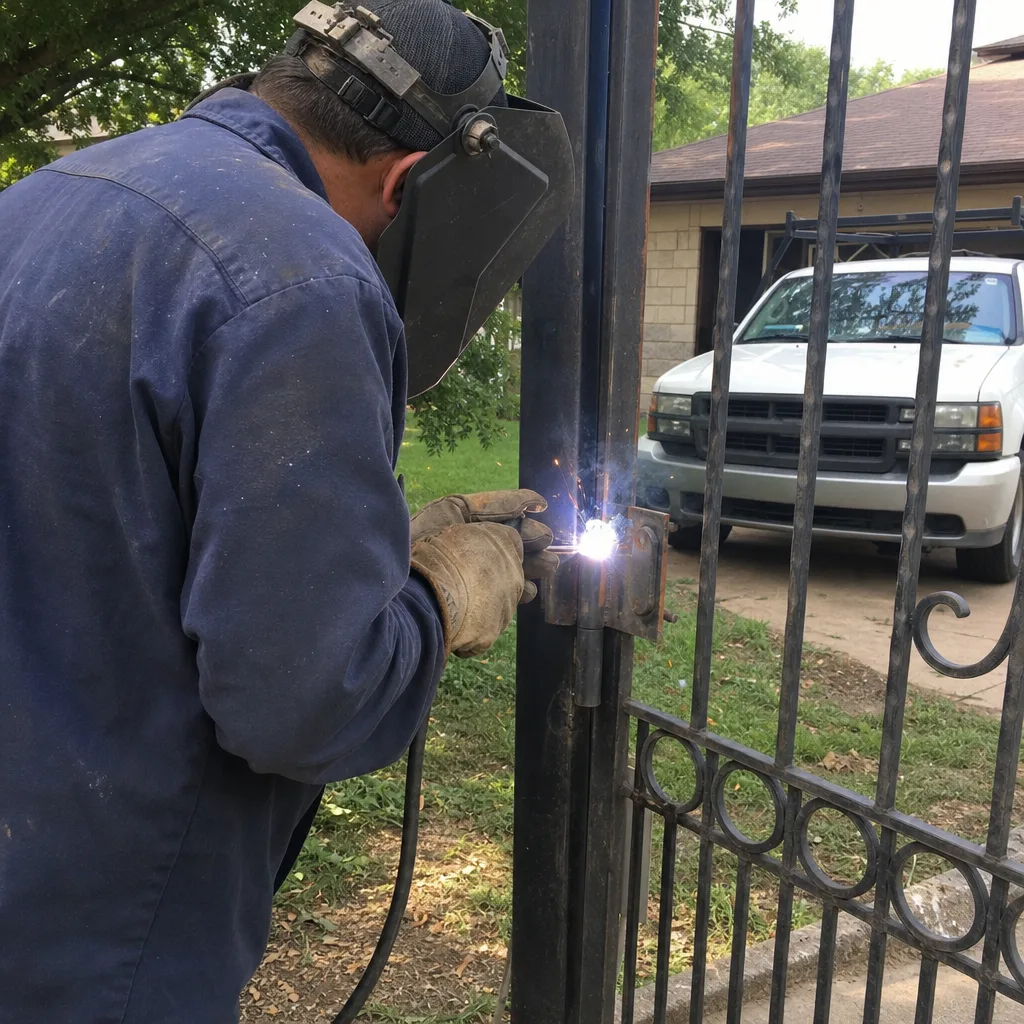
Welded gate frames can develop hairline fractures at the stress points. Wrought-iron and steel gates in Dallas expand and contract significantly over a 40-degree temperature swing, and the freeze event is the sharpest swing of the year, often 35 degrees in 18 hours. At the hinge welds and the mid-rail joints, hairline cracks open up. These aren’t visible to a homeowner. We find them with a bright light and a close visual inspection, because a hairline crack in February becomes a visible gap by May, once the gate has been through a hundred more open-close cycles. A cracked weld caught early is a $100 weld repair; a broken mid-rail because it went undetected is often a $900 gate leaf replacement or a full gate installation in Dallas.
One more freeze-specific failure we see regularly in Dallas: ice damning at the base of a slide gate track. When meltwater runs down the gate face and refreezes in the track channel, the gate wheels hit a solid ice dam on their next travel. The motor doesn’t stop; it pushes. The wheels or the rack take the damage. If a gate in Dallas makes a rhythmic thumping sound after a freeze event, the track has likely been deformed or the wheels have flat-spotted, and both require service before the next freeze, not after.
Spring Realignment After the Clay-Soil Freeze-Thaw Cycle
Dallas sits on expansive clay soil, and clay soil moves gates. It shrinks during the dry summer, swells after fall rain, and then the freeze-thaw cycle of a February ice event jacks the movement into a measurable shift over just a few days. By March, a gate post that was plumb in October can be off by a degree or more. That doesn’t sound like much, until you realize a 1-degree post tilt translates to a gate leaf that now sits 1 to 2 inches out of plane at the latch end.
The spring realignment protocol we run on Dallas gates is specific, and it’s measurable. Here’s what we check and what tolerance triggers a service call:
- Post plumb, measured in two planes. We use a digital level on the hinge post and the latch post, measuring both across the driveway and along the driveway. Anything beyond 0.5 degrees of tilt means the gate will bind somewhere in its travel arc, and the fix is post re-setting or shimming, which runs $250 to $600 depending on the post size and whether concrete work is needed.
- Leaf-to-post gap at the latch. The gap between the gate leaf and the latch post should be consistent top to bottom. If the top gap is visibly wider than the bottom gap, the leaf is sagging or the post is leaning. A sag that puts the latch more than 3/8-inch out of alignment is a service trigger, because the latch will start wearing its own strike plate and the motor will work harder on every close.
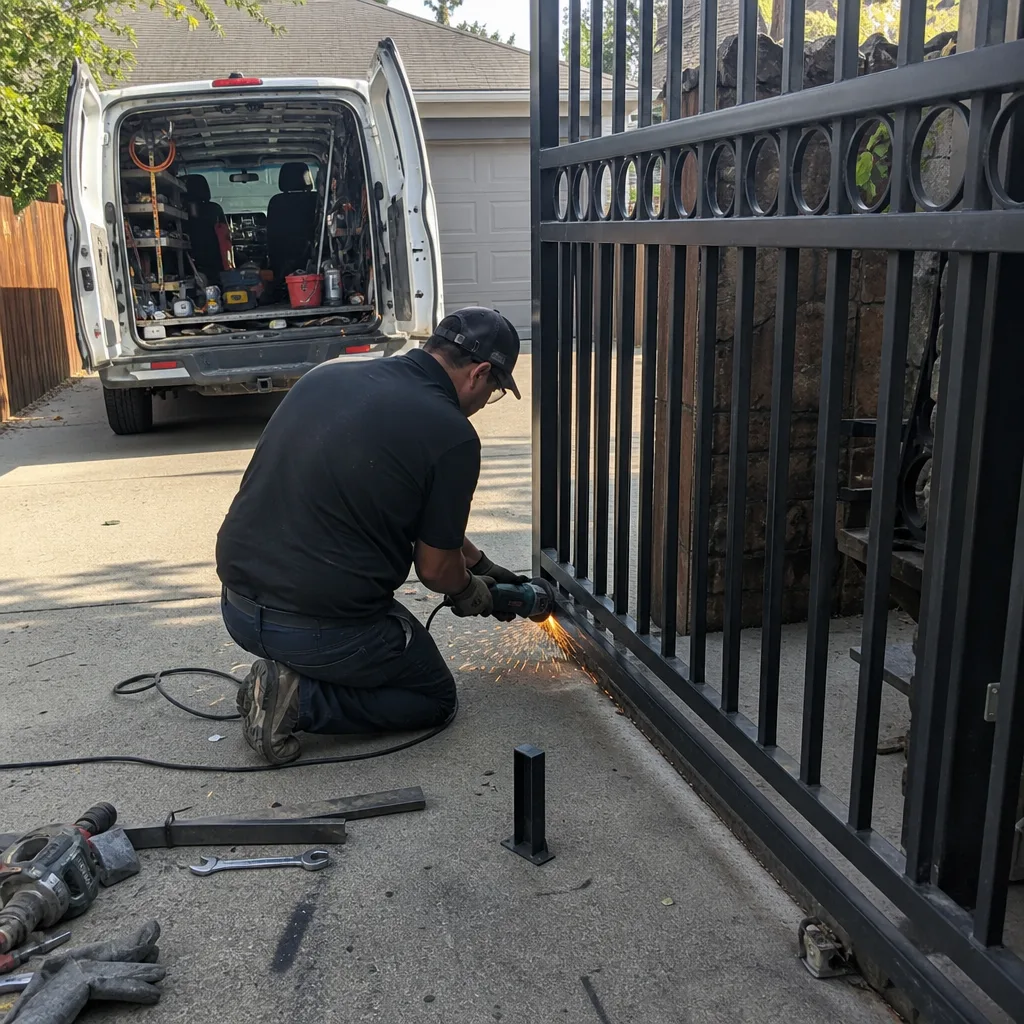
- Track level on slide gates. For slide gates, we run a laser level along the track. Clay soil lift in Dallas can bow a track by half an inch over 20 feet, and that bow makes the gate labor through the middle of its travel. A track that’s out of level by more than 1/4-inch over 20 feet needs re-shimming, typically $180 to $350.
- Hinge wear check. Freeze-thaw movement stresses the top hinge the most on a swing gate. We check for vertical play by lifting the gate leaf slightly at the latch end; any perceptible movement means the hinge bushing is worn, and if it’s not replaced, the gate will continue to sag even after the posts are realigned. Hinge bushing replacement runs $80 to $200 per hinge depending on the gate weight.
The cost of ignoring spring realignment is the quiet killer. A gate that’s binding at the latch adds load to the motor with every cycle, and over a Dallas summer, that extra load heats the windings and shortens the motor’s life by a year or more. It’s the same pattern we see with freeze damage: the visible symptom seems minor, the hidden cost is the motor. Vance Gate Repair Dallas home includes spring alignment in all seasonal service visits, because the clay-soil cycle is predictable and the fix is cheaper in April than it is in September.
Fall Electrical Check: Battery Backup Before Short Days
The fall electrical protocol in Dallas isn’t about cold weather, not primarily. It’s about daylight. The shortest days of the year land in November, December, and January, and for any gate running a solar-charged battery or a battery-backup system, those short days mean the battery is getting 40 percent less charge energy than it was in June. Dallas’s winter sun angle drops to about 35 degrees, and an 8-hour charging window in midwinter yields less than half the watt-hours of a 12-hour summer window.
A battery that was marginally healthy in September, after a summer of heat degradation, fails quietly in November because it’s no longer getting enough charge to recover from its nightly drain. The gate still works, because the battery still has enough reserve for a few cycles. And then a cloudy stretch or a Dallas ice event kills the reserve capacity entirely, and the gate won’t open at exactly the moment the homeowner needs it most.
The fall electrical check should include:
- Battery load test under actual motor draw. Not just a voltage reading. We test the battery under the actual amp load of the motor, because a battery can show full voltage at rest and fail under load. This is especially critical for FAAC and BFT operators, which use sealed lead-acid batteries that quietly lose capacity over 3 to 4 years.
- Charge controller verification. On solar systems, we verify the charge controller is actually delivering charging voltage to the battery on an overcast day. A charge controller that works in sun but fails in overcast conditions leaves the battery to drain unchecked through Dallas’s cloudiest months.
- Transformer output check on AC-powered gates. For gates on household power, we verify the transformer or the operator’s internal power supply is holding its rated output. Low voltage from a degraded transformer forces the motor to run hot, and that’s the same winding damage pattern we see from freeze resistance, just slower.
- Wire connection inspection after the summer thermal cycling. Dallas heat expands and contracts every screw terminal in the operator housing, and by fall, some of those terminals have loosened enough to add resistance. A loose terminal on a gate opener draws more current, heats up, and can eventually arc. We pull and re-torque every connection.
The fall protocol is the one Dallas homeowners skip most often, because the gate still works in October and November. But December and January are when that false confidence collapses. The right time to test a battery backup system is before the shortest daylight months, not during them. In our experience, a fall electrical check catches about 80 percent of the battery failures that would otherwise surface in a November or December service call, and it costs far less than the emergency call when the gate won’t open on a 20-degree morning.
What Normal Operation Sounds Like in Each Season
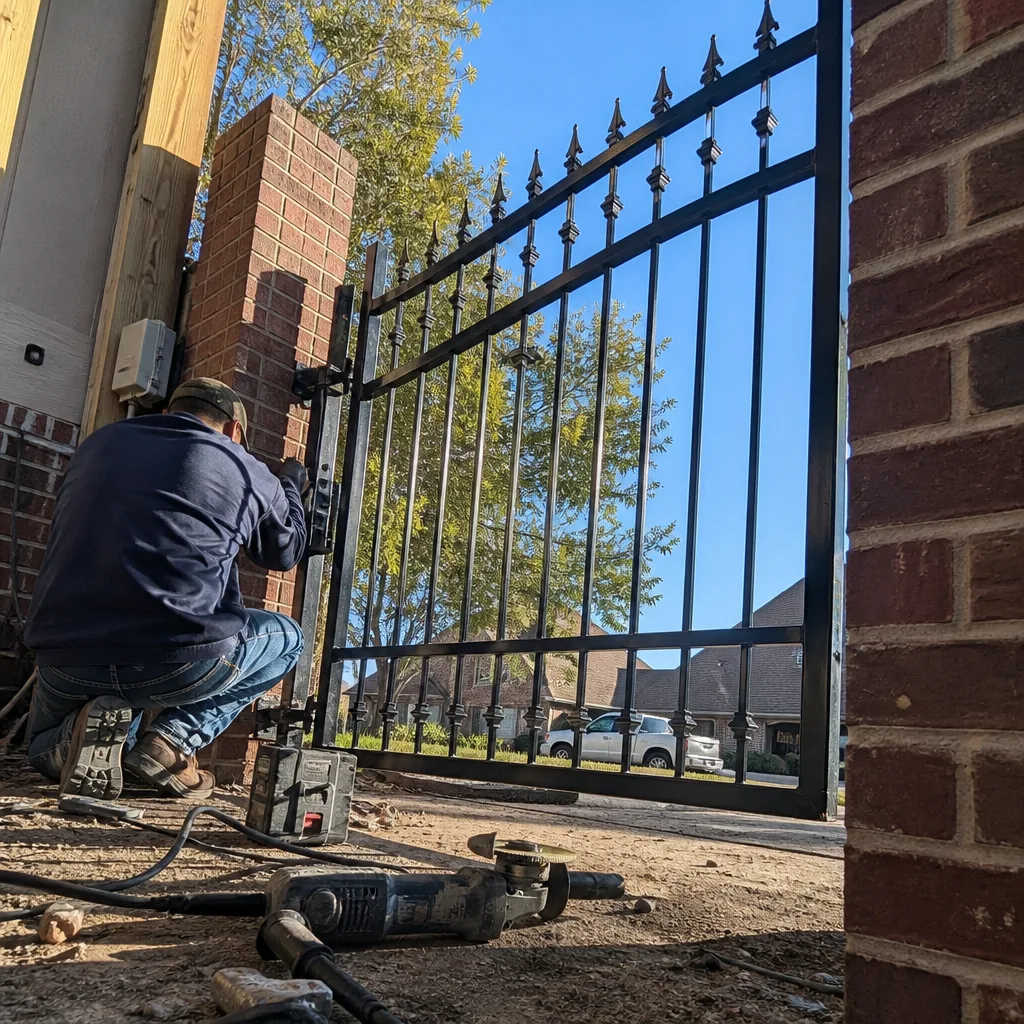
Every gate has a baseline sound, and in Dallas, that baseline shifts slightly with the season. Knowing what’s normal and what’s drift is the cheapest diagnostic tool a homeowner has, and it’s something we teach on every service call. Here’s what to listen for:
- Summer baseline: a smooth, consistent hum with no strain at either end of travel. In summer, grease is thin and the gate moves easily, so the motor hum should be even and relatively quiet. A change to a high-pitched whine in July or August usually means the grease has thinned out completely and metal is contacting metal on the rack. A grinding sound means the wear has already started, and the repair is more involved than a simple re-lubrication.
- Winter baseline: a slightly deeper hum, but still smooth. Cold grease is thicker, so the motor works a little harder and the hum is a half-step lower in pitch. That’s normal. What’s not normal is a labored, slow start, especially on the first cycle of a freezing morning. A motor that sounds like it’s straining to get the gate moving is running close to stall, and that’s the condition that takes years off motor life in a single season.
- After a freeze event: listen for a rhythmic thump in slide gates. That thump is the wheel hitting an ice-created deformation in the track, or a flat-spotted wheel. It won’t go away on its own, because the deformation doesn’t smooth out as the ice melts; it just becomes less visible.
- In spring: listen for a clicking or a squeak at the latch end of a swing gate. That’s usually the latch binding due to post movement from the clay-soil cycle, and it’s the earliest audible warning that the gate needs realignment.
- Any new grinding, clicking, or straining at any season is a service trigger. A gate’s noise signature shouldn’t change month to month. If it does, something has changed inside the gate, and it’s cheaper to diagnose that change in its first week than after it becomes a full mechanical failure.
A Mighty Mule opener, for example, has a distinct whine when its plastic gear begins stripping under load, and Dallas homeowners with Mighty Mule units often report hearing that whine in the weeks after the first freeze. By the time the gear strips fully, the opener is typically unrepairable and the unit needs replacement. Catching the whine in week one is the difference between a $40 gear and a $500 motor replacement.
Common Mistakes to Avoid
- Running a single annual maintenance visit. A once-a-year inspection in Dallas inevitably misses one of the two damage seasons. An April visit catches winter damage but misses August heat stress; an October visit catches heat stress but misses the February ice event. Two seasonal visits, one in early August and one in early March, are the minimum for a Dallas gate.
- Lubricating with WD-40 or a general-purpose spray. WD-40 is a solvent, not a lubricant, and it strips away the existing grease. Dallas gates need a lithium-based grease rated for 130 degrees or higher, reapplied on the rack, chain, and pivots every 90 days through the hot season. This mistake alone accounts for a significant percentage of rack and chain replacements we perform in Dallas.
- Ignoring the February freeze because “Dallas doesn’t get that cold.” Dallas gets wet freezes, not dry cold snaps, and wet freezes are the most damaging condition for a gate because the ice expansion acts on every seal and joint at once. The gate may still work through the ice event and fail quietly in March.
- Manually forcing a gate that’s frozen shut. If a gate won’t move during or after an ice event, the worst thing a homeowner can do is force it, either by hand or by repeatedly cycling the opener. That’s how gears strip and motors burn. High-tension springs and cables on a swing gate carry enormous stored energy, and a frozen gate under tension is a serious safety hazard. The gate should be left alone until a gate repair professional in Dallas can assess it safely.
- Replacing a motor without finding out why it failed. A motor that burns out in Dallas almost always burned out for a reason: a binding gate, a frozen track, a shifted limit switch, a failing capacitor, or a loose terminal. Replacing the motor without fixing the cause just buys another 12 to 18 months before the new motor fails the same way. Our documentation habit exists precisely because the second failure is avoidable when the first one is properly recorded.
- Skipping the battery load test because the gate still opens. A battery that opens the gate at 2 p.m. on a sunny day can fail completely on a 20-degree night. Load testing under actual motor draw, not just voltage testing, is the only way to know if the battery will hold its reserve when the gate actually needs it.
- Waiting for the gate to stop working before calling. The most expensive gate repairs in Dallas are the ones that could have been caught in the noise-change or gap-change phase. Gates don’t typically fail without warning; they fail after weeks or months of warnings that went unread.
When to Call a Professional

A homeowner can and should handle basic observation: listening for noise changes, watching for gap inconsistencies, keeping the track clear of debris. But several conditions require a professional, and the boundary is clear. If a gate is making a grinding or straining sound, if the photo-eye is misaligned and won’t stay aligned, if the gate closes and immediately reverses, if a battery shows low voltage under a DIY test, or if any component shows visible damage after a freeze event, it’s time to call. The same applies to any symptom involving a gate’s high-tension springs or cables: those components store enough energy to cause serious injury, and they are not DIY-servicable. Vance Gate Repair Dallas offers free estimates in Dallas, and the written price is handed over before any work starts, every single time, no exceptions. Call (469) 299-5902 and a live person answers, 24 hours a day, seven days a week.
Frequently Asked Questions
A seasonal gate service visit in Dallas typically runs $120 to $250 per visit, depending on the gate type and what’s found. A full year of the two-visit protocol (early August and early March) usually lands between $240 and $500, including lubricant reapplication, battery testing, and limit switch verification. Emergency repairs that could have been prevented by seasonal maintenance typically start at double that. Call (469) 299-5902 for a written price on seasonal service, quoted before any work begins.
Yes, and you should: listening for noise changes, clearing the track, checking the gap at the latch, and visually inspecting for cracked seals are all homeowner-appropriate. What you shouldn’t do yourself is anything involving high-tension springs, cables under load, limit switch adjustment, control board diagnosis, or battery load testing under motor draw. See DIY vs Professional Gate Repair: The Dallas Homeowner’s Decision Guide for a full breakdown of what’s safe to handle yourself. Those require tools, training, and in the case of springs and cables, a real safety risk. A DIY mistake on a spring-loaded gate in Dallas can turn a $200 maintenance item into a $1,500 repair or a serious injury.
That’s the classic signature of a heat-degraded capacitor on the control board. The board and capacitor are cool enough in the morning hours to hold a stable charge, but by mid-afternoon, the operator housing has heat-soaked to 120 degrees or more, the capacitor can’t hold its rated charge, and the board won’t trigger the motor. The fix is usually a capacitor replacement, $40 to $120 depending on the board, but it should be done before the capacitor fails completely and takes the board with it. Call (469) 299-5902 for a written diagnosis and price.
A rest-voltage test tells you almost nothing. A battery can show 12.7 volts at rest and collapse under motor load. The only meaningful test is a load test: put the battery under the same amp draw the motor requires and watch what the voltage does. If it drops below 10.5 volts under load, the battery needs replacement regardless of its rest voltage. Most gate batteries in Dallas last 3 to 4 years, shorter if they’re heat-exposed in the summer. We include a load test on every seasonal service visit; call (469) 299-5902 to schedule one before the next cold snap.
The number one oversight we see in Dallas is the battery, specifically the false confidence that comes from a gate that still opens and closes. A battery that’s two-thirds dead still opens the gate on a sunny 70-degree afternoon. The failure doesn’t show up until a 20-degree night or a three-day overcast stretch, and by then the homeowner is in an emergency situation at the worst possible time. The fall load test catches this every time, and it’s a $10 diagnosis on a component that costs $85 to $220 to replace. Skipping it is the single most expensive non-decision a Dallas gate owner can make.
A full seasonal service at Vance Gate Repair Dallas includes a written pre-service inspection, battery load testing under motor draw, lubricant reapplication to the rack, chain, and pivot points, limit switch verification, photo-eye alignment check, post and track alignment measurement, seal inspection, terminal re-torquing, and a complete photo log of every adjustment and reading. Under Clause 4 of the Haven Standard, that photo log is left with the homeowner and filed in the job record at no additional charge. The written price is handed over before any work starts. Call (469) 299-5902 to schedule the August pre-check or the March post-freeze protocol.
The Bottom Line
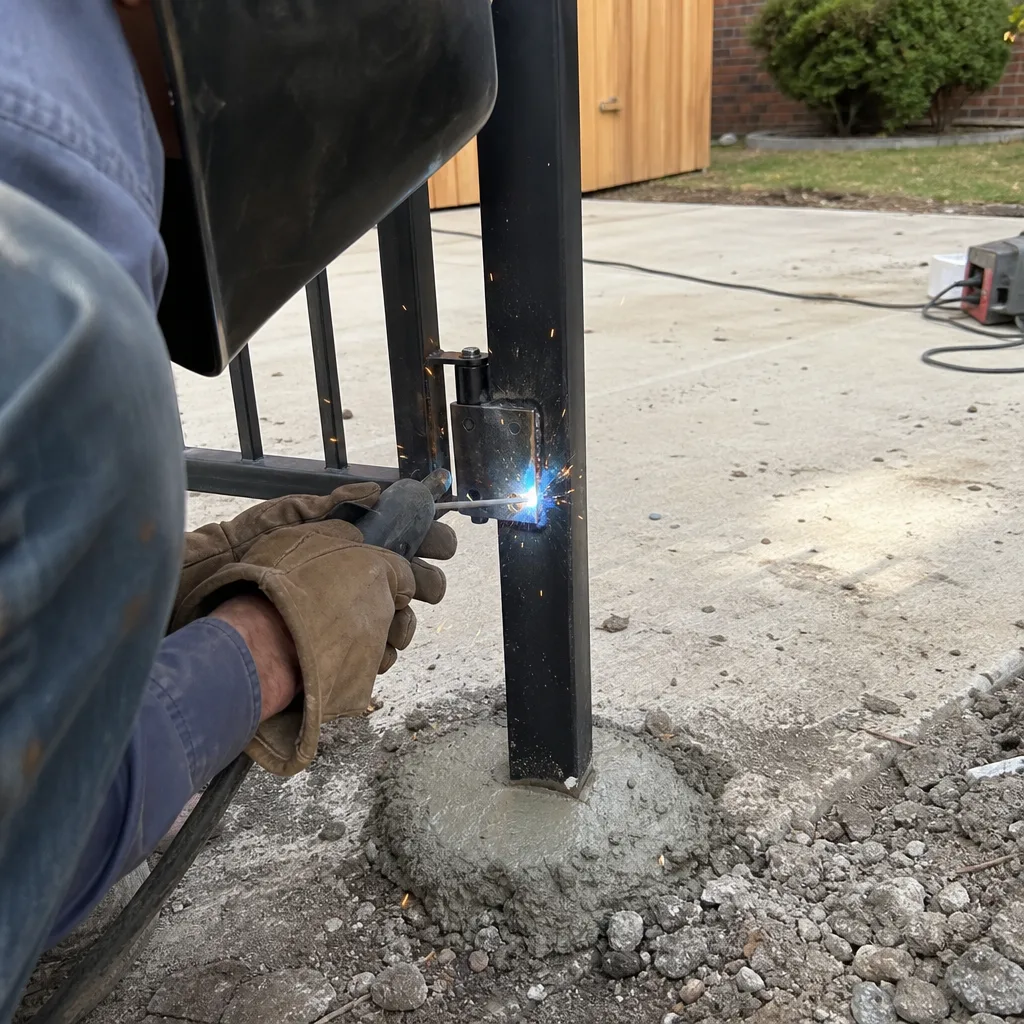
Dallas gates don’t need a generic annual tune-up; they need two seasonal protocols that address the city’s two distinct damage modes. The August pre-check catches heat degradation before capacitors fail and grease disappears. The March post-freeze protocol catches ice damage before it shows up as a worn motor or a broken weld. Homeowners who run both protocols get roughly double the motor life, according to what we see across thousands of Dallas service records, and they avoid the emergency calls that come with a 20-degree night and a gate that won’t move. The cost is modest: two service visits a year, typically $240 to $500 total, against a motor replacement that runs $400 to $900 and a full installation that can push past $3,000. The math favors the protocol.
Need a written price for seasonal service in Dallas? Call (469) 299-5902. A live person answers, and the price is in writing before any work starts.
Written by Adrian Vance, Owner at Vance Gate Repair Dallas, serving Dallas since 2014.