
Last updated September 20, 2026
Free on-site gate assessment - hinges, posts, and your LiftMaster or Nice gate operator checked before anything is quoted
The assessment is free and the quote is the invoice.


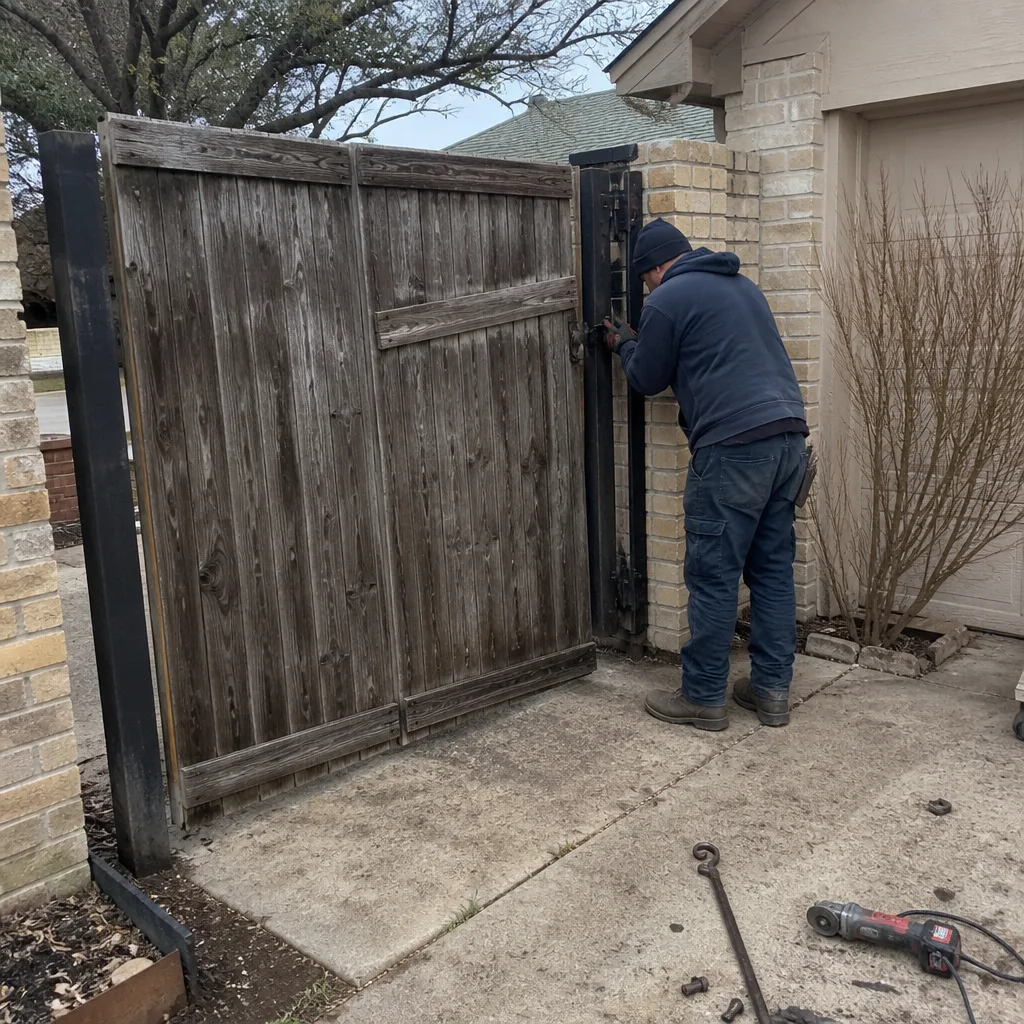 Before
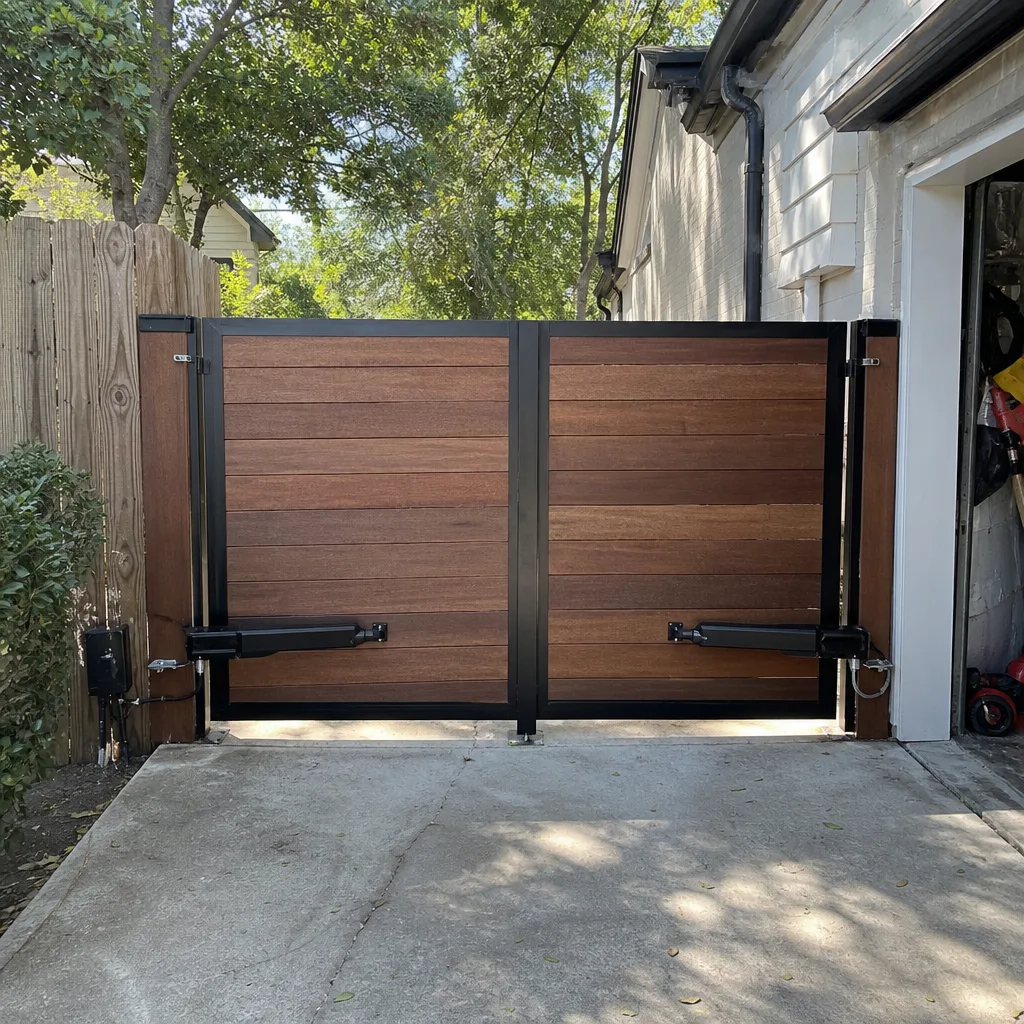 After
After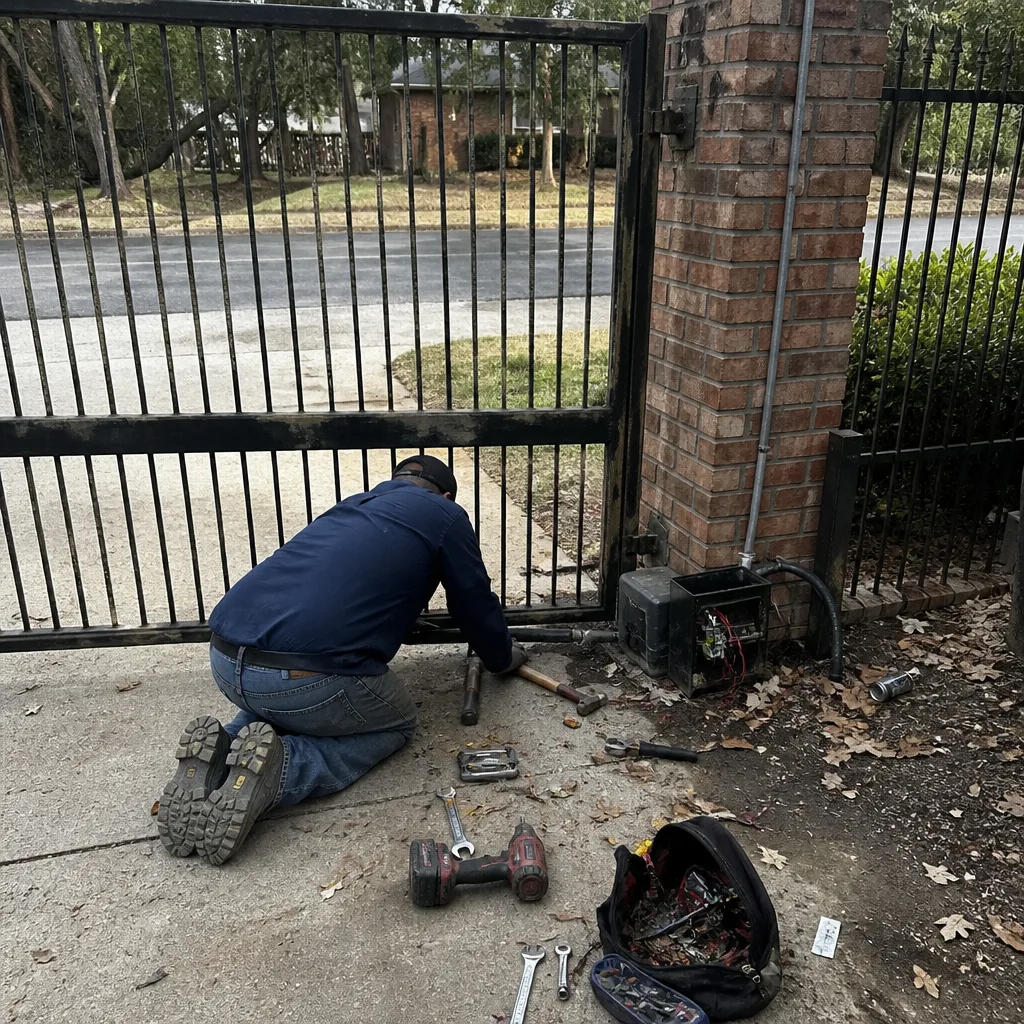 Before
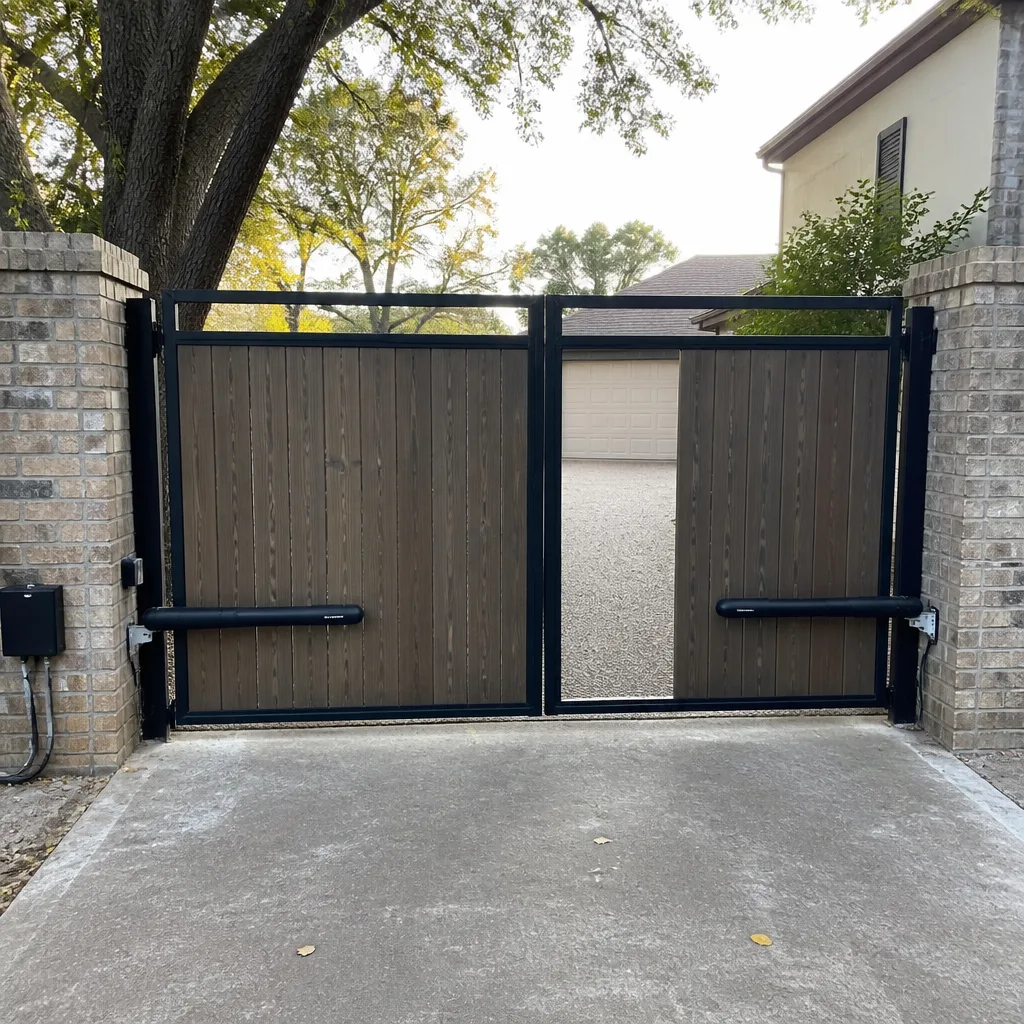 After
After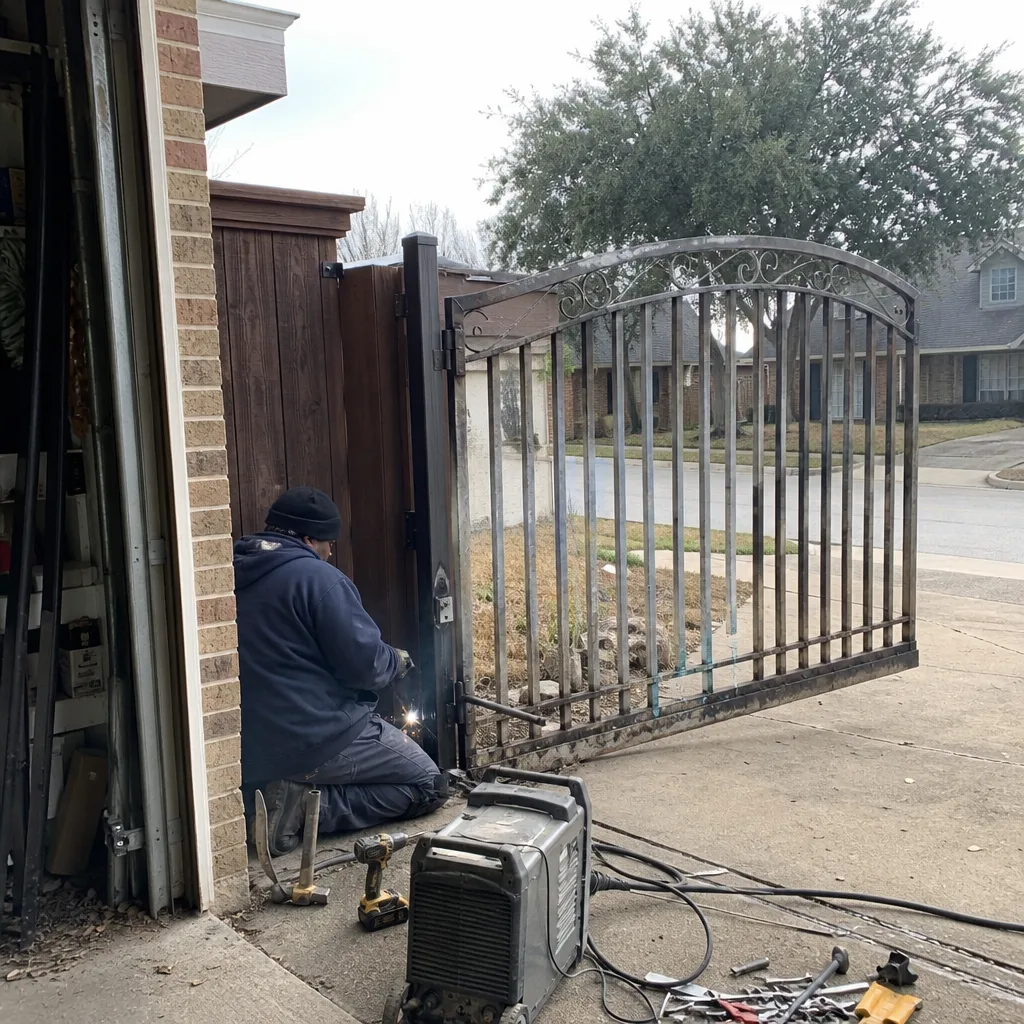 Before
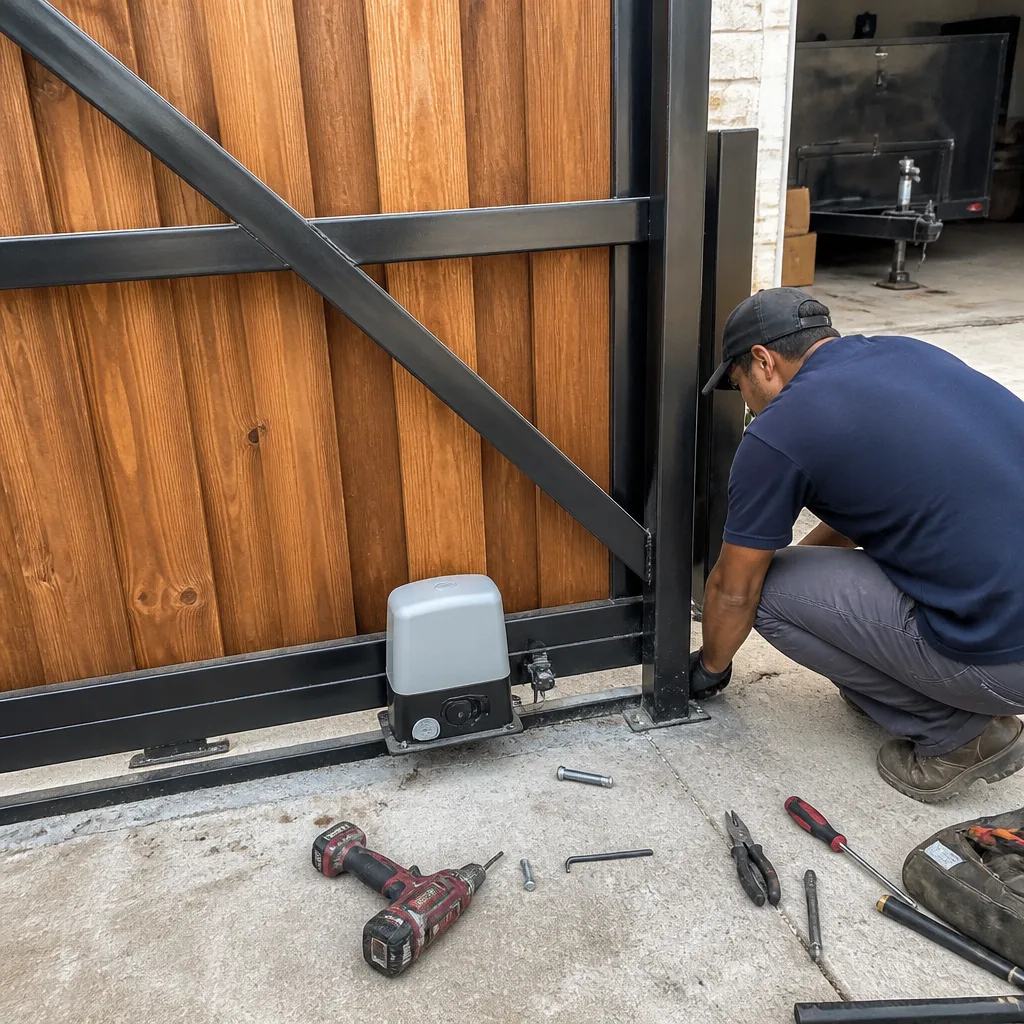 After
AfterGate Repair Permits, Codes & Inspections in TX: What You Need to Know
Most residential gate repairs in Dallas never come within a mile of a permit office. The city doesn’t care if you replace a hinge, swap a circuit board, or weld a cracked post bracket. But the moment you run a new electrical line, pour a new footing for a structural post, or install a brand-new automatic opener where none existed, you’ve crossed into regulated work. The homeowners who skip that permit usually don’t find out until a buyer’s inspector flags the unpermitted electrical during a sale, and then a $2,400 gate project becomes a $6,800 closing problem. This guide maps exactly where the permit line sits in Dallas, how HOA rules stack on top of city code, and what an inspector actually looks at when they show up. For hands-on help, explore our Gate Repair services.
Quick Answer
Like-for-like gate repairs in Dallas, such as replacing a broken hinge, rewiring to the same circuit, or swapping a failed motor for the same model, generally require no city permit. A permit is required when the work adds a new electrical circuit, replaces a structural post that holds the gate’s weight, or installs an automatic opener for the first time. The bigger risk for most Dallas homeowners is unpermitted prior work discovered at sale, because the repair itself may be sound but the missing permit becomes a title and insurance problem. Learn to spot trouble early with our Gate Repair Warning Signs: A Dallas Homeowner’s Reference Guide.
Table of Contents
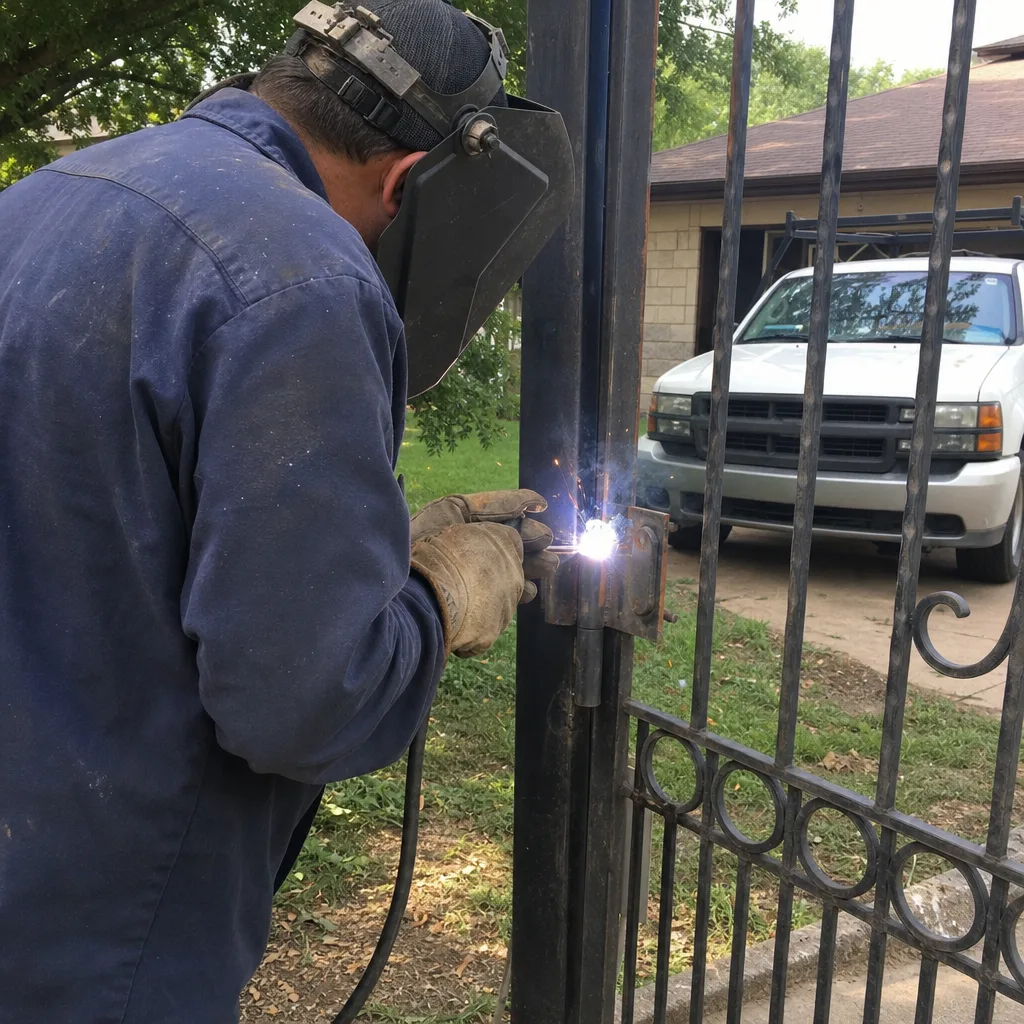
- Where the Permit Line Actually Sits in Dallas
- New Electrical Circuits: The Most Common Trigger
- Structural Post Replacement and Footings
- New Operator Installation vs. Like-for-Like Swap
- How HOA Rules Layer on Top of City Code
- What the Low-Voltage Exemption Covers and Where It Ends
- The Inspection Process: Timeline and What the Inspector Checks
- How to Pull a Permit History on a Property Before You Buy
- Common Mistakes to Avoid
- When to Call a Professional
- Frequently Asked Questions
- The Bottom Line
BeforeAfterWhere the Permit Line Actually Sits in Dallas
The City of Dallas regulates gate work through its building code, and the city’s position is straightforward: repairs that restore a gate to its original condition without changing how it’s powered, anchored, or controlled are maintenance, not construction. No permit needed. The national model codes that Dallas adopts create a practical three-part test we use with every customer before we touch a tool.
First, ask whether the work changes the electrical supply. Adding a new branch circuit from your panel to a gate opener is electrical work, and in Dallas electrical work of that scope requires a permit. Tapping into an existing circuit to replace a failed transformer or control board does not.
Second, ask whether the work changes the structural support. A gate post carries the entire weight of the gate leaf and the force of the opener. Replacing a rotted or bent post means cutting or excavating the old footing and setting a new one. Dallas treats this as structural work, and it requires a permit when the post serves as the primary support for an automatic gate.
Third, ask whether the work creates a new automatic system. If you have a manual gate and you’re adding a motor, arms, safety edges, and photo-eyes, you’re installing new equipment regulated by code. That installation requires a permit. If you have a failed LiftMaster and you’re putting in a newer LiftMaster on the same post with the same electrical connection, that’s a like-for-like swap, and Dallas does not require a permit for it. More on this in the sections below.
The permit line is not about the size of the job. It’s about whether the job changes power, structure, or system category. A $300 hinge repair needs no permit. A $7,000 ornamental iron gate made from scratch and hung on existing, sound posts in place of a wooden gate of the same width and weight class may not need one either. A $900 motor upgrade that requires a new 20-amp circuit does.
New Electrical Circuits: The Most Common Trigger
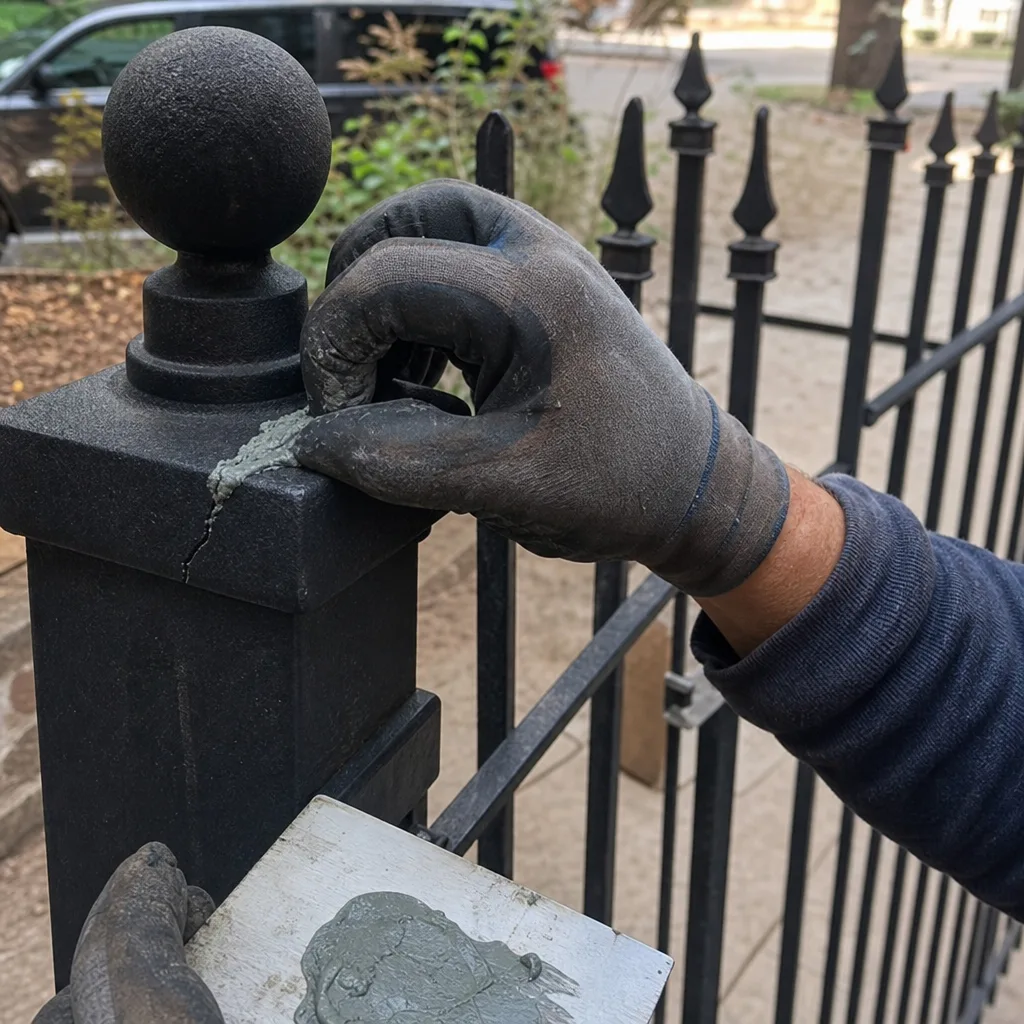
When a Dallas homeowner calls us about a gate opener that keeps tripping a breaker, the root cause is often an undersized circuit installed years ago, sometimes by a previous owner or a handyman. The fix may be as simple as moving the opener to an existing circuit with enough capacity, a repair that needs no permit because no new circuit is created. But when there is no circuit available and we have to run a new line from the panel to the gate, that’s the single most common reason a gate project in Dallas crosses into permit territory.
Here’s what a new electrical circuit for a gate opener typically involves in Dallas:
- Running conduit or direct-burial wire from the main panel to the gate location. The depth of burial is set by code, and Dallas inspectors check it.
- Installing a dedicated breaker sized to the opener’s draw, which for most residential swing-gate motors from brands like BFT or Linear runs between 3 and 8 amps.
- Providing a disconnect means at the gate so the opener can be shut off without going inside the house.
- Bonding and grounding the gate frame if it’s metal, which Dallas code requires for any metal gate near or fed by an electrical circuit.
The permit for this electrical work is pulled through the City of Dallas, and the electrical contractor doing the work holds the permit. The inspection happens after the rough-in, before the trench is covered, because the inspector needs to see the burial depth and conduit type. Too many Dallas homeowners have paid for a new circuit, had it covered with dirt, and then learned the inspector wanted to see it exposed. That means digging it up, which is a cost nobody quoted.
One specific Dallas consideration: the city’s clay soil. Dallas sits on expansive clay that moves with moisture. A trench that’s code-compliant in dry October may be disrupted after heavy spring rain. We always photograph the trench at inspection depth before backfill, as part of our standard documentation, because the photo becomes the record if the inspector has any follow-up. The gate motor and opener work we do in Dallas always includes this photo record, whether or not a permit is involved.
Structural Post Replacement and Footings
Gate posts fail in Dallas for predictable reasons. The soil swells in spring, shrinks in August, and a post set in a shallow footing grouted into shifting clay eventually leans, cracks the pillar, and drags the gate leaf into the ground. When the post is the hinge-side post for a heavy automatic gate, it’s not a cosmetic problem. It’s a structural one.
Dallas permits structural post replacement when the post is part of a gate system that is powered. The city wants to know that the new footing is deep enough for the soil conditions, which in Dallas generally means a footing that extends below the frost-adjusted depth and accounts for expansive clay. The inspector, when one attends, is checking the depth, the concrete used, the anchoring method for the post, and whether the post is plumb and the gate leaf re-hung within tolerance.
Here is the sequence for a permitted structural post replacement in Dallas:
- A licensed contractor pulls the structural permit through the City of Dallas, describing the post, the gate, and the reason for replacement.
- Old post and footing are removed, and the hole is inspected for depth and soil before concrete is poured, if the city requires a footing inspection.
- New post is set, braced, and the gate re-hung. Level and swing are documented before concrete cures.
- The final inspection confirms the post is stable, the gate operates without binding, and any safety devices on the automatic system are working.
If a gate post is purely decorative, meaning it holds no weight and does not support an opener, Dallas does not require a permit to replace it. The permit requirement follows the word “structural.” We tell Dallas homeowners the same thing every time: if the post is the hinge point for a gate that opens and closes, treat it as structural until the city confirms otherwise.
New Operator Installation vs. Like-for-Like Swap
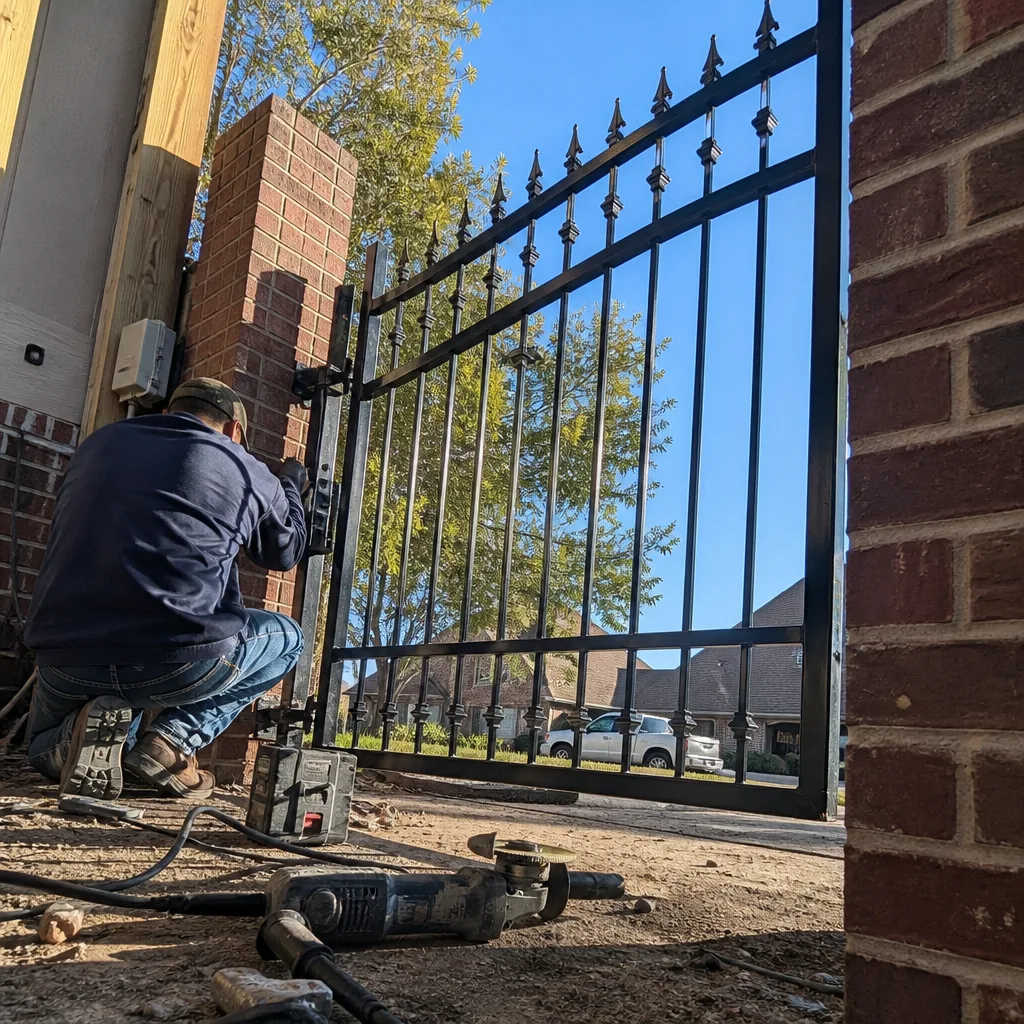
The distinction matters more than the motor brand. A like-for-like swap means a failed automatic opener is removed and a new one is installed in its place using the same mounting, same power supply, and same gate. No permit. This applies whether the old motor is a FAAC, a BFT, a LiftMaster, or a Linear, and whether the new one is the same model or a newer version of the same class. Dallas views it as equipment replacement, not new installation.
A new installation is different. If a gate has never been automated, or if the existing opener was a solar-powered unit and you’re converting to a hardwired 120-volt system, or if the arm type changes so much that the mounting structure and safety layout have to be redesigned, that’s a new operator installation. Dallas requires a permit for new operator installations because the code treats them as a new system: power supply, safety devices, obstruction sensing, and emergency release all have to meet current standards from the start.
Here’s what we see in Dallas when homeowners don’t understand this distinction. A homeowner buys a manual ornamental gate. A few years later, they decide they want it automated. The gate company runs a cord from the side of the garage, mounts an actuator, sets the photo-eyes roughly in place, and walks away without a permit. The system works. About three to five years later, the house goes under contract, the buyer’s inspector looks at the gate operator, and asks where the permit record is. There isn’t one. The buyer’s lender wants the unpermitted electrical resolved before closing. The seller now has to pull a retro permit, which means the city sends an inspector who may want the wiring exposed and the safety system brought up to the code in force today, not the code from when the work was done.
That’s the pattern. The repair was never the problem. The missing record was.
How HOA Rules Layer on Top of City Code
Dallas HOAs operate on a separate track from city permits, and neither one substitutes for the other. A city permit proves the work meets code. An HOA architectural approval proves the work meets the neighborhood’s appearance and design standards. You can have one without the other, and increasingly in Dallas suburbs with automated gate communities and gated estate properties, you need both.
HOAs in Dallas neighborhoods like Preston Hollow, Bluffview, and the private gated sections of North Dallas typically require written architectural approval before any gate that faces the street is replaced, repainted, raised, widened, or automated. The HOA committee is not checking your footing depth. They’re checking the height of the gate, the color of the metal, whether the design matches the neighborhood’s adopted standards, and whether an automatic opener’s control box is screened from view.
The practical sequence for a Dallas homeowner in an HOA-governed neighborhood is:
- Pull the HOA architectural application and get written approval for the gate design, material, height, and automation before signing any contract.
- Determine whether the work triggers a city permit using the three-part test in the section above.
- Pull the city permit if required.
- Complete the work with documented records for both processes.
- Retain the HOA approval letter and the city permit record in the same file as the property records, because a future buyer’s title agent may ask for both.
One thing we tell every Dallas customer: HOA approval is not a building permit. An HOA board member’s signature confirms the neighborhood’s design review. It does not create a public record with the City of Dallas. When a buyer’s inspector asks for a permit, the HOA letter will not satisfy the request. Two separate paper trails.
What the Low-Voltage Exemption Covers and Where It Ends
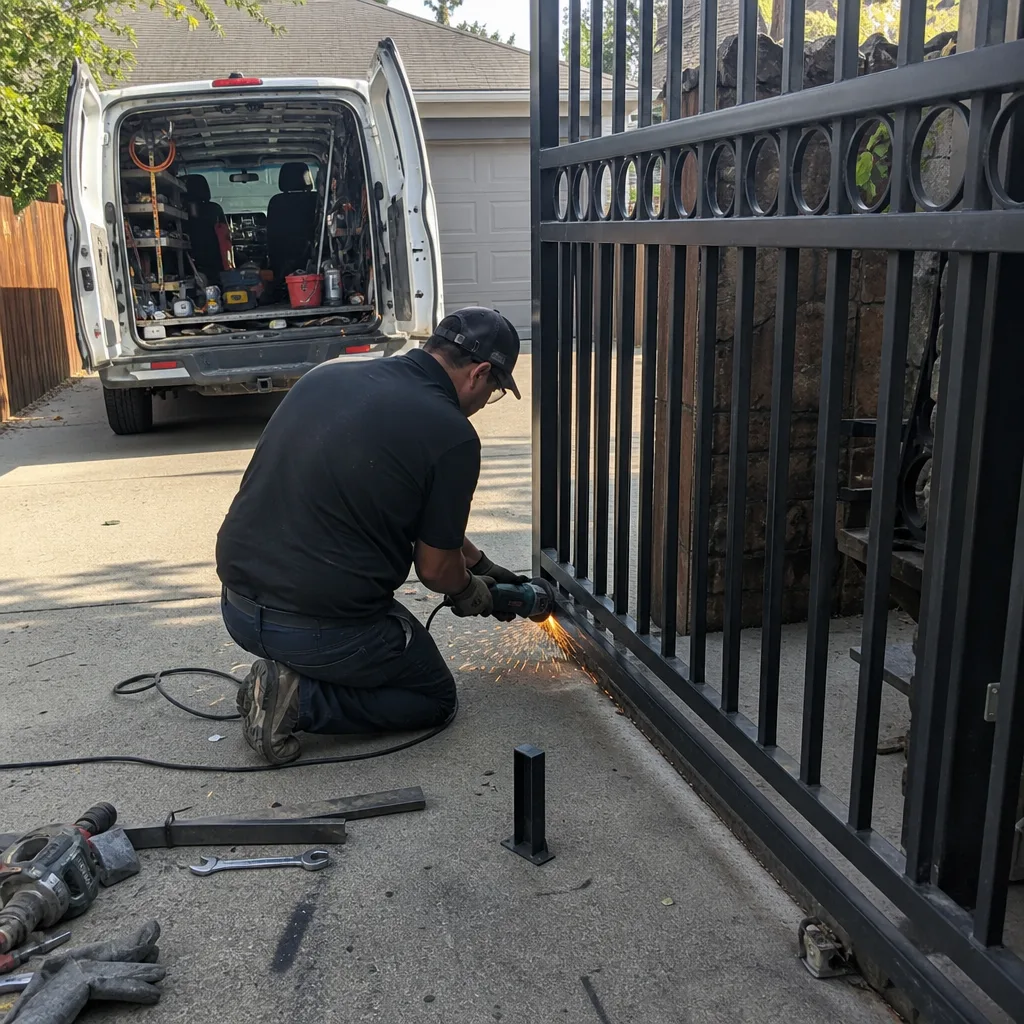
Most modern gate openers and all gate safety accessories run on low voltage. The control board, photo-eyes, keypads, vehicle loop detectors, and edge sensors are typically 12 or 24 volts DC. In many Texas jurisdictions, low-voltage work is exempt from electrical permitting because it doesn’t carry the same shock and fire risk as line-voltage work. Dallas follows this general approach for most low-voltage gate accessory work.
Here’s what the low-voltage exemption typically covers in Dallas:
- Replacing a failed photo-eye with a compatible unit and repointing it along the same path.
- Rewiring a keypad or card reader with the same conductor count and voltage.
- Adding a vehicle exit loop and detector wired into an existing opener’s control board.
- Swapping a control board within the same housing and voltage rating.
The exemption ends where the power source begins. A low-voltage gate opener still gets its power from somewhere. If that somewhere is a 120-volt branch circuit that feeds a transformer at the gate, and the work requires running a new line to that transformer, that’s line-voltage work. Low-voltage exemption does not cover it. If the opener is powered by an existing dedicated circuit and you’re only working downstream of the transformer, the low-voltage rules apply and no electrical permit is needed in most Dallas scenarios.
There’s a second place the exemption ends: when the gate is part of a vehicular access system for a multi-unit property. A single-family residential driveway gate on low voltage is one thing. A private road gate with a vehicle loop, a fire department key switch, and an emergency release system for a gated community is another. That is access control, not a driveway convenience, and the code requirements change. Dallas treats those installations as commercial or multi-family even when the property is residential in character. When a job crosses from “my driveway gate” to “the gate everyone in the enclave drives through,” the low-voltage amateur exemption does not travel with it.
The Inspection Process: Timeline and What the Inspector Checks
Dallas residential gate work that requires a permit goes through the city’s standard inspection cycle. Homeowners who have never pulled a permit expect this to be fast. It’s not fast, but it’s predictable once you understand the sequence.
Here’s the timeline as we’ve consistently experienced it in Dallas:
- Day 1-3: Permit application is filed with the City of Dallas, including a scope of work and, for electrical, the contractor’s license information. Residential permits for straightforward gate work are often reviewed within a few business days.
- Rough-in inspection: Called when the trench is open, the new circuit is run, or the post footing is excavated and reinforcement is in place. The inspector is looking at burial depth, conduit type, post-hole depth, and any reinforcing steel. Nothing gets covered until this inspection passes.
- Final inspection: Called after the opener is mounted, the gate is hung, and all safety devices are installed. The inspector checks the photo-eye function, the gate force sensitivity, the emergency release operation, and the electrical disconnect.
What the inspector actually looks at on a final for an automatic gate in Dallas usually comes down to four things. One, the disconnecting means, which has to be accessible and clearly identified. Two, the bonding connection on a metal gate frame, which is a code item many installers forget because they assume it only applies to pools. Three, the photo-eye placement, because Dallas follows the UL 325 standard for automatic gate operators, and UL 325 requires the gate to reverse or stop when an obstruction is detected at any point in the travel path. Four, the force setting, because the gate must stop and reverse at a low enough force to prevent entrapment. The inspector tests these because entrapment is the one safety failure that makes gate code serious.
Most permitted gate work in Dallas passes final on the first visit when the installer has done the work in the order the inspector expects: rough-in first, with everything exposed, then cover, then final. The failures we see are almost always sequencing failures: someone buried the wire before the rough-in inspection, or mounted the opener before the footing was signed off.
How to Pull a Permit History on a Property Before You Buy

This is the part of the guide that saves someone in Dallas a very expensive discovery. Before you buy a home with an automatic gate, or a home built recently enough that gate work may have happened in the last decade, pull the permit history. It’s public record, and in Dallas it’s searchable through the city’s online permit portal.
The process:
- Go to the City of Dallas building permit search tool and enter the street address.
- Review the permit list for any electrical, structural, or gate-related permits tied to the property.
- If an automatic gate exists and there is no record of a permit for its electrical supply, request the seller’s disclosure and ask specifically whether any unpermitted work was done.
- If the seller confirms unpermitted work, build the cost of a retro permit and any code upgrades into your offer or your repair negotiations.
In our experience on the gate installation side in Dallas, we’ve seen the same scenario at least a dozen times: a seller lists a house with a beautiful automated driveway gate, no one asks about permits, the contract is signed, and the buyer’s inspector finds a non-compliant or unpermitted electrical feed in week two of the option period. The sale doesn’t usually die, but the seller often eats a $2,000 to $4,000 repair credit to resolve it. A permit history check costs nothing and takes fifteen minutes. A buyer who does it before writing the offer is doing diligence the way an access-control contractor would.
If the property is in an HOA, pull the HOA’s architectural approval record at the same time. The HOA file will show whether the seller got approval for the gate’s design and height. A gate that never received HOA approval is a compliance problem, not a code problem, but it’s still the buyer’s problem after closing.
Common Mistakes to Avoid
- Burying the electrical line before the rough-in inspection. The Dallas inspector wants to see the trench, conduit, and burial depth before cover. Bury it early and you’ll be digging it back up on your own time and budget.
- Assuming an HOA approval is a building permit. The HOA letter covers design standards. The city permit covers code compliance. Neither replaces the other, and a buyer’s inspector will ask for the city record.
- Accepting a verbal quote for permitted work. Any gate project that crosses the permit line has enough moving parts that a handshake quote will not survive the inspection process. Get the scope and price in writing before work begins, especially in Dallas where permit timelines can push a project past the original estimate window.
- Replacing a structural post with a shallower footing to save time. A post that leans again in two years will cost more to redo properly than it would have cost to set correctly the first time, and in Dallas clay, shallow footings fail fast.
- Ignoring the photo-eye requirement on a gate that was originally manual. The moment a manual gate becomes automatic, UL 325 applies. The photo-eyes, the force setting, the reverse function, the emergency release all become code requirements, not accessories.
- Not keeping the permit record with the property file. The permit is only useful years later if someone can find it. Put the final inspection record, the HOA approval, and the contractor’s written scope into the same file you’d hand a future buyer’s agent.
- Skipping the permit history check before buying. A $0 records search is the cheapest insurance against a $3,000 to $5,000 closing credit demand in Dallas.
When to Call a Professional
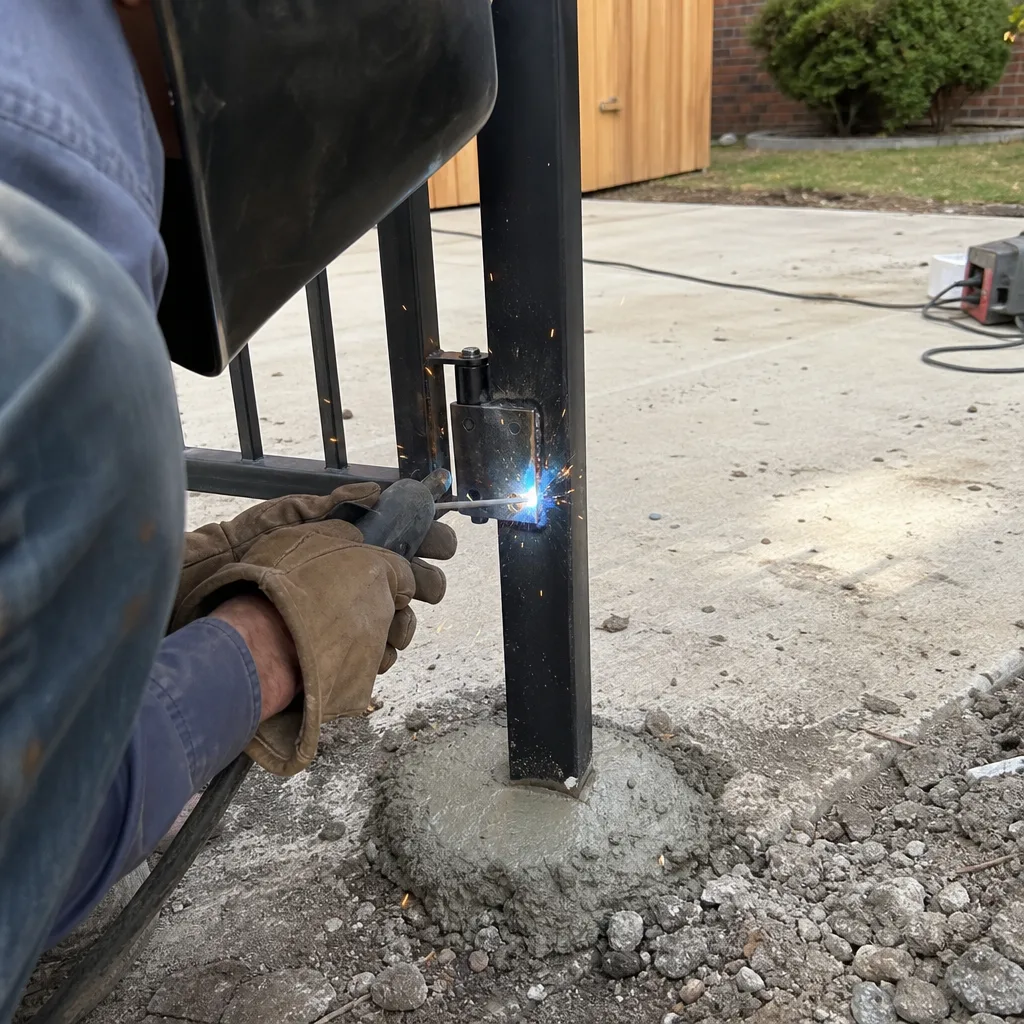
Call a professional when the work touches the permit line, and don’t guess at where the line is. A new electrical circuit, a structural post footing, a first-time automatic operator: these are not the places to learn Dallas code by trial and error. The same applies to any gate system connected to a vehicular loop, a fire department access key switch, or an emergency release that serves more than one household. If you’re under contract to sell a home and the gate permit question has already come up, that’s another time to stop and call. Vance Gate Repair Dallas offers free estimates in Dallas and can tell you on the first call whether your job crosses the permit line from the gate repair side in Dallas. Call (469) 299-5902 and have someone look at the gate and the existing electrical before you spend a dollar on parts.
Frequently Asked Questions
No permit is required for a like-for-like repair: replacing a hinge, fixing a weld, swapping a failed opener for the same class of opener, or repairing existing wiring on the same circuit. You need a permit when the repair becomes new work, such as adding a new electrical circuit or replacing a structural post that supports an automatic gate. Call (469) 299-5902 if you’re not sure which category your repair falls into.
A new dedicated circuit for a residential gate opener in Dallas typically runs between $1,200 and $2,800 when the trench, conduit, breaker, disconnect, and two inspections are included. The range depends on the length of the run, whether the path crosses paving, and whether the existing panel has spare capacity. The permit fee itself is small; the cost is the electrical labor and the inspection sequencing.
As the current owner, the unpermitted work is on your title now. The most common resolution is a retro permit, which means calling the city, describing the existing work, and scheduling an inspection to confirm the installation meets current code. If it doesn’t, which is common with older work, you’ll pay for the corrections before the inspector signs off.
Yes. Vance Gate Repair Dallas answers live 24/7, and we can usually get a technician to a Dallas property the same day for a flagged-gate evaluation. We’ll assess exactly what the inspector found, tell you what’s code-relevant and what isn’t, and put a written price in your hand before any work starts. Call (469) 299-5902.
On a final inspection for automatic gate work, the Dallas inspector checks four things as a rule: the disconnecting means for the opener, the bonding on a metal gate frame, the photo-eye placement and function, and the force setting that stops the gate from entrapment. On a rough-in, the inspector checks trench depth, conduit type, and footing depth before anything is covered.
A solar-powered opener that is not tied to the home’s electrical panel generally does not require an electrical permit in Dallas because there is no branch circuit to inspect. However, the first-time automation of a previously manual gate, even with solar power, still triggers the structural and safety review if the mounting or post work is significant. The solar panel removes the electrical permit question but not necessarily the structural one.
The Bottom Line
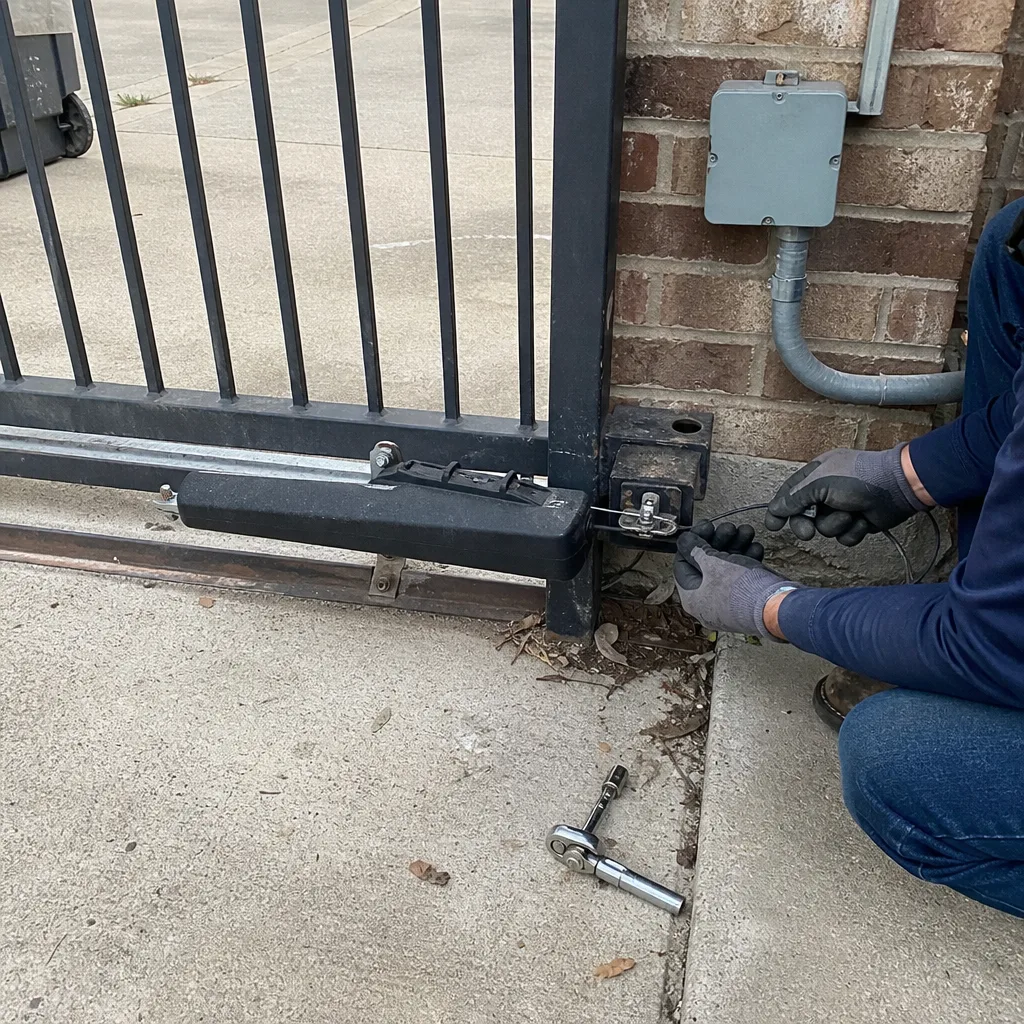
Most gate repairs in Dallas need no permit. The ones that do, need one for a reason: new electricity, new structure, or a new automatic system. The permit protects the homeowner twice, first by making sure the work is inspected, and second by creating the paper trail that keeps a future sale from stalling. The Dallas homeowners who get into trouble are not the ones who skip a hinge repair. They’re the ones who automate a gate without a record of the electrical work, then stand in the front yard five years later while a buyer’s inspector asks where the permit is. Know the line, keep the records, and if you’re not sure, ask before you dig. Browse our more guides & resources for Dallas homeowners.
Written by Adrian Vance, Owner at Vance Gate Repair Dallas, serving Dallas since 2014.