
Last updated September 20, 2026
Free on-site gate assessment - hinges, posts, and your LiftMaster or Nice gate operator checked before anything is quoted
The assessment is free and the quote is the invoice.



 Before
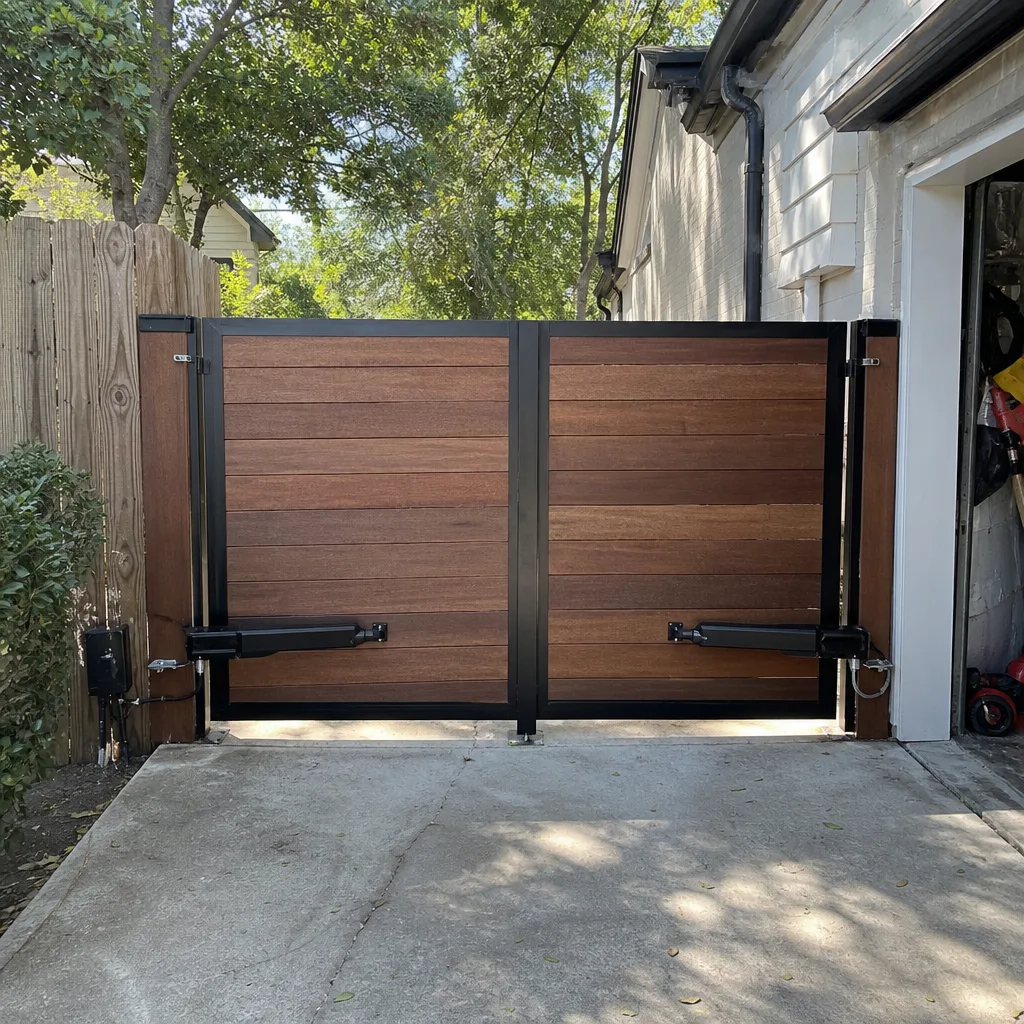 After
After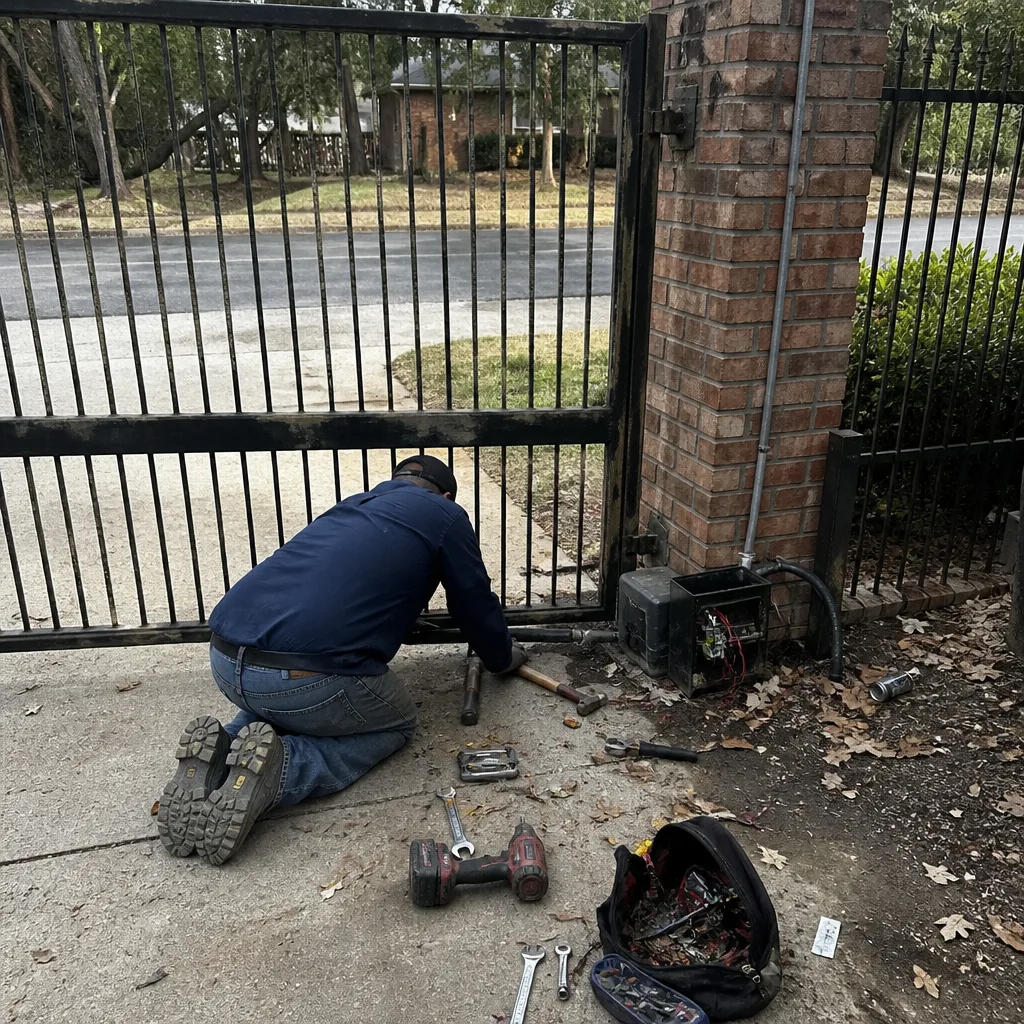 Before
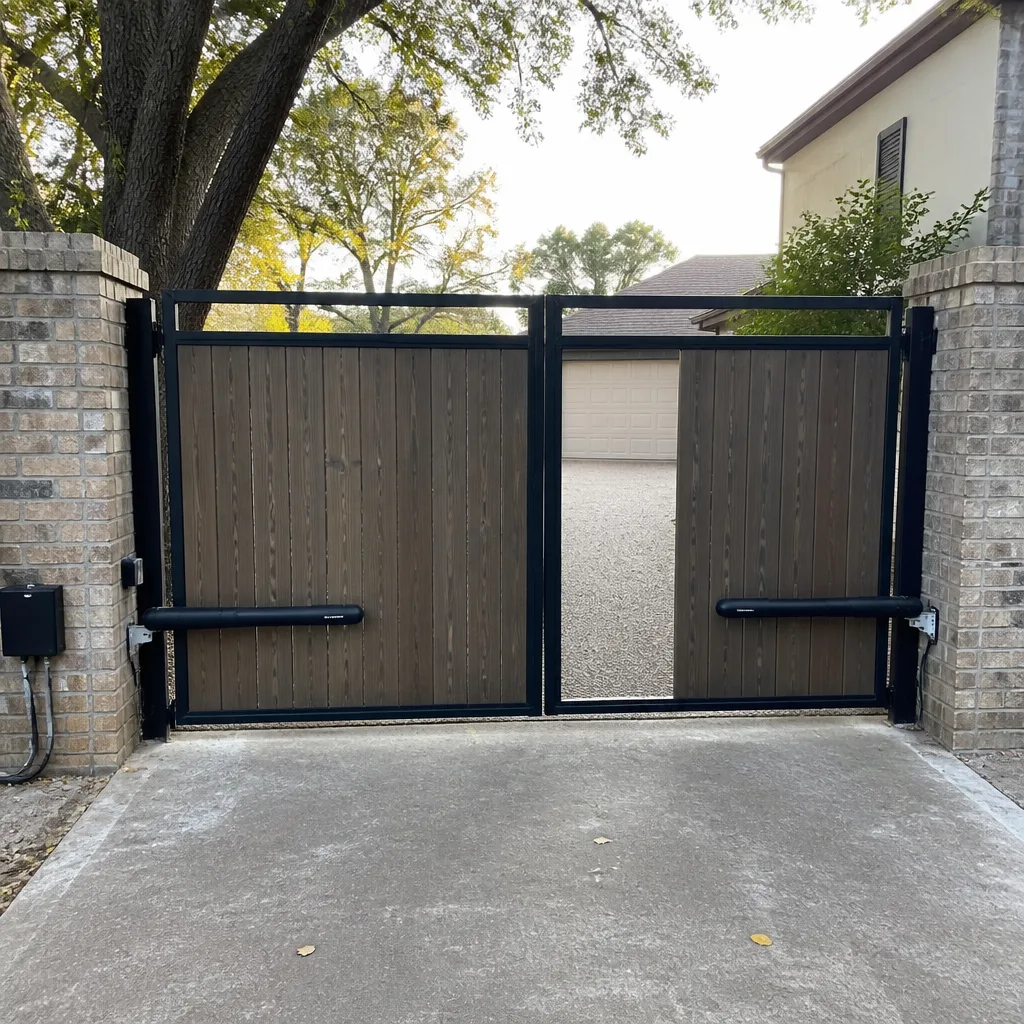 After
After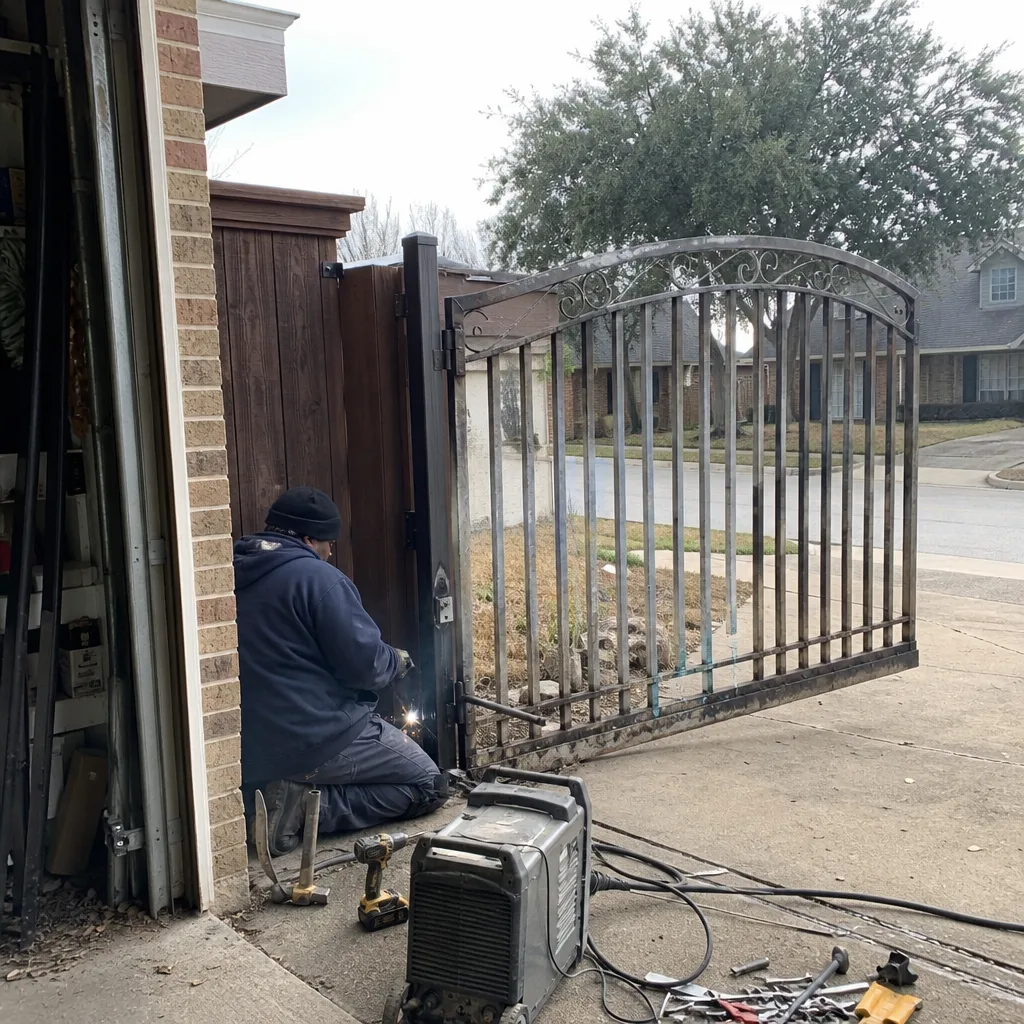 Before
 After
AfterThe Complete Guide to Gate Repair in Dallas
Most repeat gate service calls in Dallas are paying to rediscover a problem that was already found and fixed once. The first technician left no record, so the second one starts from scratch at the homeowner’s expense. This guide maps the full repair landscape from diagnosis to final sign-off, using the paper trail as the through-line, and links to more guides & resources for ongoing maintenance. You’ll learn why Dallas soil movement causes more gate failures than motor wear, how to tell a swing-gate problem from a slide-gate problem in 100-degree heat, and what a legitimate repair visit should leave behind besides a working gate.
Quick Answer
Gate repair in Dallas means diagnosing one of three root causes: heat-warped alignment, an undersized or drifting operator, or a missing service record that forces every new technician to re-diagnose from zero. Most repairs run between $120 and $850 depending on the failure, and the fastest way to stop paying twice for the same problem is to demand a written scope of work, before/after photos, and limit-switch readings from every visit. For an exact quote on your gate, call Vance Gate Repair Dallas at (469) 299-5902 for Gate Repair services, open 24/7 with a live person.
Table of Contents
- Why Gates Fail in Dallas More Than Anywhere Else
- Swing Gate Failures vs. Slide Gate Failures: What Changes Above 100°F
- Limit-Switch Drift: The Most Misdiagnosed Symptom in Dallas Gate Repair
- Undersized Operators: Why the Wrong Motor Destroys the Gate
- What a Real Repair Visit Should Leave Behind: The Documentation Standard
- How to Read a Written Scope of Work and Confirm a Root Cause
- What Gate Repair Costs in Dallas
- What You Can Check Yourself vs. What Needs a Technician
BeforeAfterWhy Gates Fail in Dallas More Than Anywhere Else
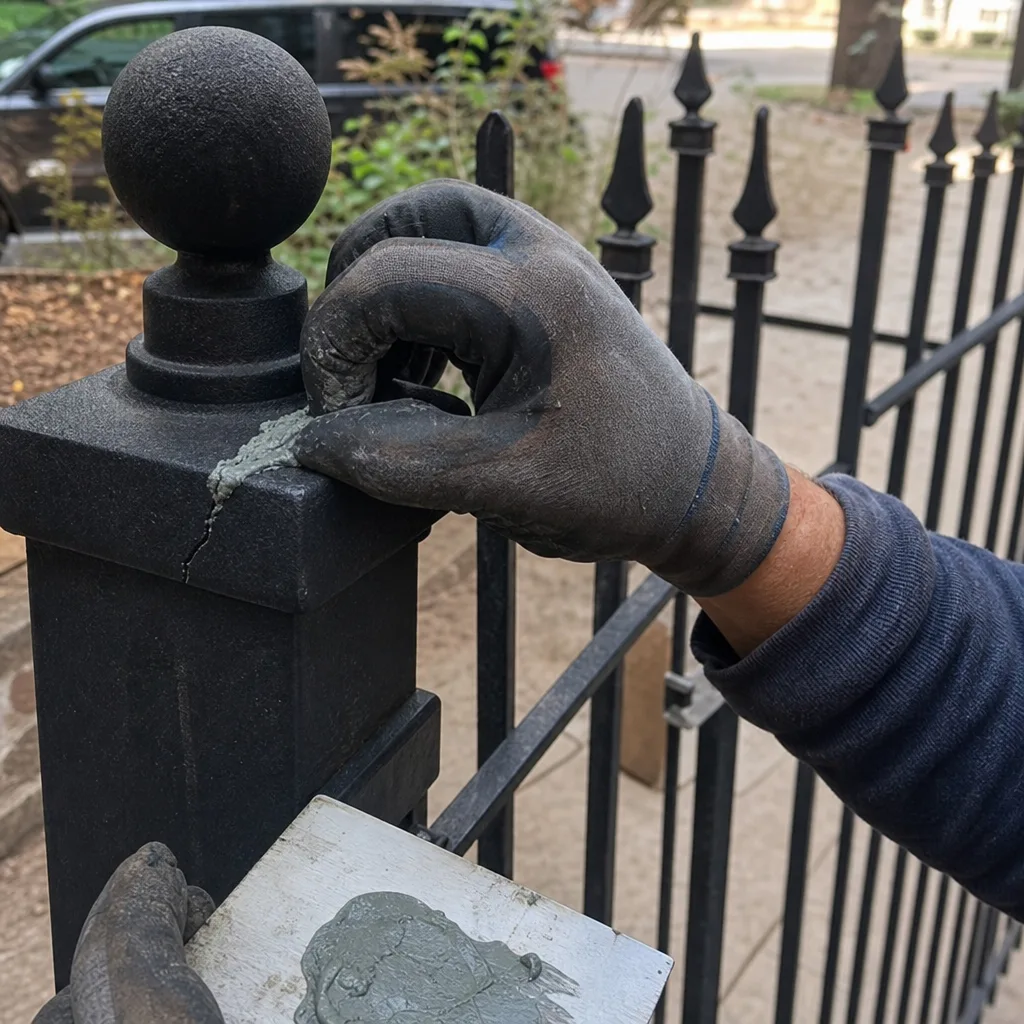
The single most common gate failure in Dallas is not a dead motor or a broken hinge. It’s misalignment caused by expansive clay soil. The blackland prairie clay that runs under most of Dallas County moves with moisture. When rain follows a dry spell, the soil swells and shifts gate posts by fractions of an inch. Over two or three seasons, those fractions accumulate. The gate begins to bind against the latch or drag across the drive. The operator keeps working harder until the thermal overload trips or the gear strips. By the time a technician sees it, the symptom looks like a motor failure, but the root cause is the ground under the post.
Here’s what that means for a repair budget: replacing a swing-gate operator without correcting the post alignment will fix the symptom for maybe eight to fourteen months, and then the new motor fails the same way. The correct repair sequence in Dallas is alignment first, operator adjustment second, and replacement only if the operator was actually undersized or damaged. A written scope of work should state which of those three was the cause, and the photo record should show the post-shim or hinge adjustment made. If a quote only lists a new motor and no alignment work, ask how the technician confirmed the posts are still true.
Swing Gate Failures vs. Slide Gate Failures: What Changes Above 100°F
Dallas heat does not affect every gate the same way. Swing gates and slide gates fail for different reasons in sustained temperatures above 100°F, and a technician who treats them identically is guessing. Knowing the difference helps you understand what you’re paying for and whether the diagnosis holds together.
Swing Gates: Heat Warps the Leaf, Not the Motor
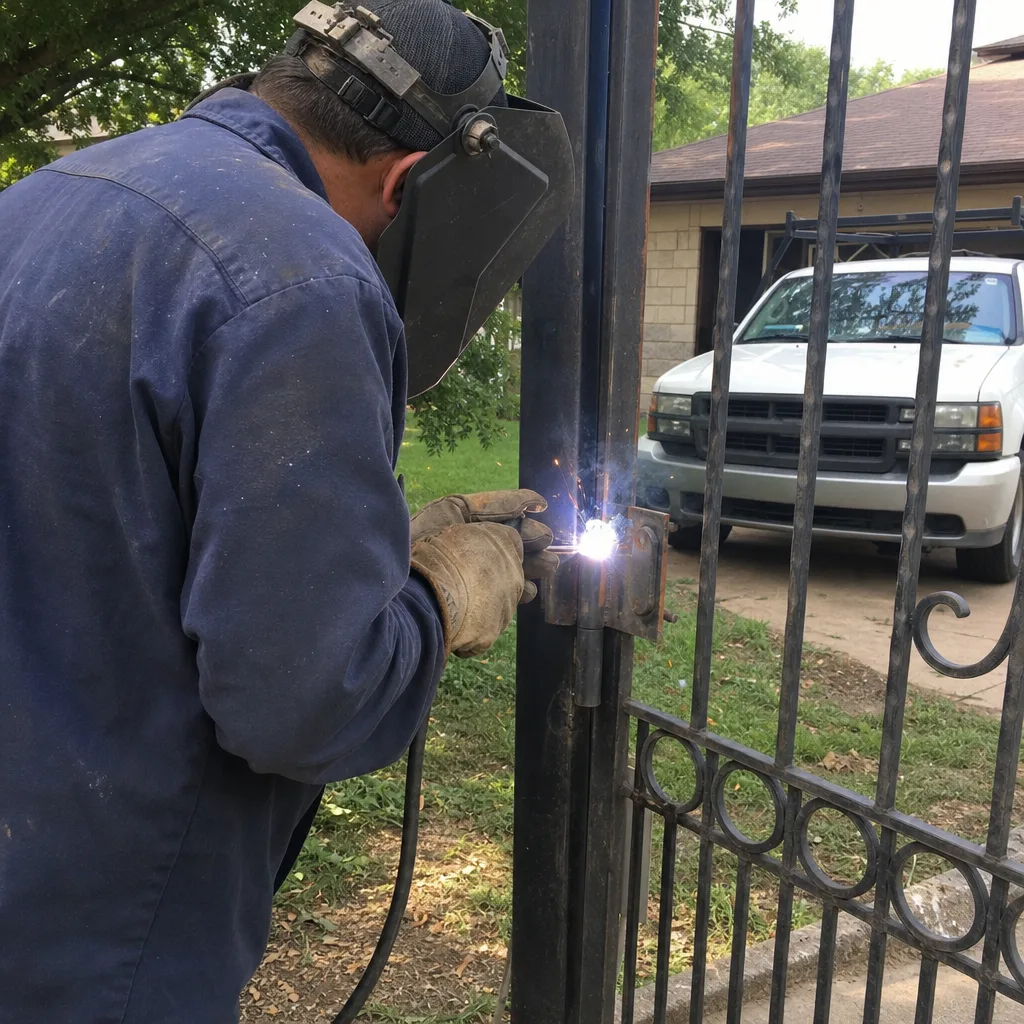
A steel or aluminum swing-gate leaf expands in direct sun. A 12-foot steel leaf can grow by a quarter inch along its length on a 105-degree afternoon. If the gate was hung with tight clearance to the latch post in cooler weather, that expansion is enough to make the gate scrape, stick, or fail to seat the latch. The most common call we see in July and August is a gate that worked fine in May and now “the opener is weak.” The opener is usually fine. The problem is clearance. The fix is a hinge or latch adjustment, and often a cold-setting adjustment documented so the gate works through the full temperature range.
Slide Gates: Heat Loads the Rollers and the V-Track
Slide gates sit on rollers, and when steel expands along the length of the track, the gate binds at one end or the other. The rollers take the abuse. Worn rollers under heat load produce a grinding sound and a jerking travel. The owner hears that and assumes the motor is failing. In our experience, at least a third of Dallas slide-gate “motor failures” are actually worn rollers, a bent V-track, or debris packed where the track meets the drive. The repair is cheaper than a motor, but only if the technician checks the track before quoting a motor replacement.
The point: if your gate fails in hot weather and the quote is a motor replacement with no mention of clearance, rollers, or track wear, get a second opinion. Vance Gate Repair Dallas will review any written estimate from another company at no cost. Bring the paperwork and we’ll tell you what the technician found and what they missed.
Limit-Switch Drift: The Most Misdiagnosed Symptom in Dallas Gate Repair
Limit switches tell the operator where the gate should stop. When they drift, the gate stops short of the latch or over-travels and bangs against the stop. The symptom is intermittent. The gate works, then it does not. The owner resets the breaker. It works again for a week. Then it fails again. This is the classic limit-switch drift pattern, and it is the single most misdiagnosed gate symptom in Dallas.
Why? Because the symptom looks electrical. The most common wrong diagnosis is a failing control board. The control board gets replaced, the gate works for a while, and then the drift returns, because the switch itself or its mounting was never addressed. What a correct reading looks like: a technician opens the operator cover, manually travels the gate to the closed position, and reads the limit switch as it engages. On a swing gate, the switch should trip within the last few degrees of travel, not 10 or 12 degrees early. On a slide gate, the open and closed limits should be set so the gate stops square in the receiver and at the physical stop, not 3 inches shy.
The differential is the giveaway. If the closed-limit position reads differently each time the technician cycles the gate, the switch is drifting. If it reads the same every cycle, the switch is fine and the problem is elsewhere. A documented repair visit shows those readings. A verbal estimate that says “bad board” without a limit-switch reading is incomplete.
Undersized Operators: Why the Wrong Motor Destroys the Gate
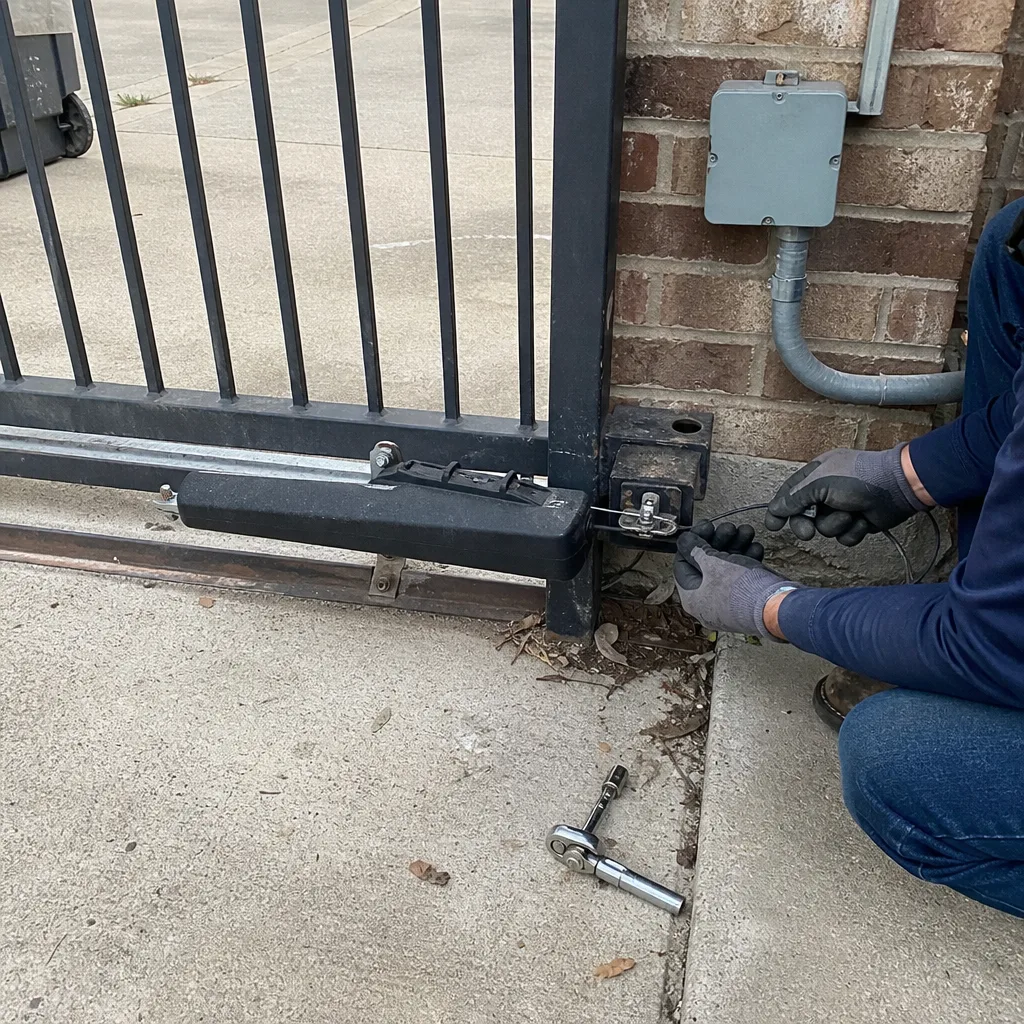
A gate operator is not a universal part. It is sized to the leaf weight, the leaf length, the wind load, and the duty cycle. A motor rated for a 300-pound, 10-foot residential gate will fail early if asked to move a 600-pound, 16-foot ornamental steel gate in Dallas wind. Undersized operators are common because they are cheaper to install and cheaper to quote. They then cost more in the long run: stripped gears, burnt transformers, repeated thermal trips, and a service history that no one writes down.
Common operator brands we service include Linear, Viking, Ghost Controls, and DoorKing. Each has residential and light-commercial lines with different ratings. The repair question is never just “which motor is dead.” It’s “was this motor ever right for this gate.” A technician who replaces an undersized motor with the same model has not repaired anything. The gate will fail again. A proper repair quote includes the operator model, the leaf weight and length, and the duty-cycle calculation that matches the new motor to the load.
Here is the rule of thumb we use in Dallas: if the operator has been replaced twice in five years, the operator was undersized the first time. Replacing it a third time with the same model is not a repair, it’s a subscription.
What a Real Repair Visit Should Leave Behind: The Documentation Standard
Every mechanical repair produces evidence: what was found, what was adjusted, what was installed. Most gate companies leave that evidence in the technician’s memory, which disappears the moment the truck pulls away. A real repair visit should leave you with a paper trail, because the paper trail is what prevents the next technician from charging you to rediscover the same diagnosis.
Here is the minimum documentation we believe every gate repair in Dallas should produce:
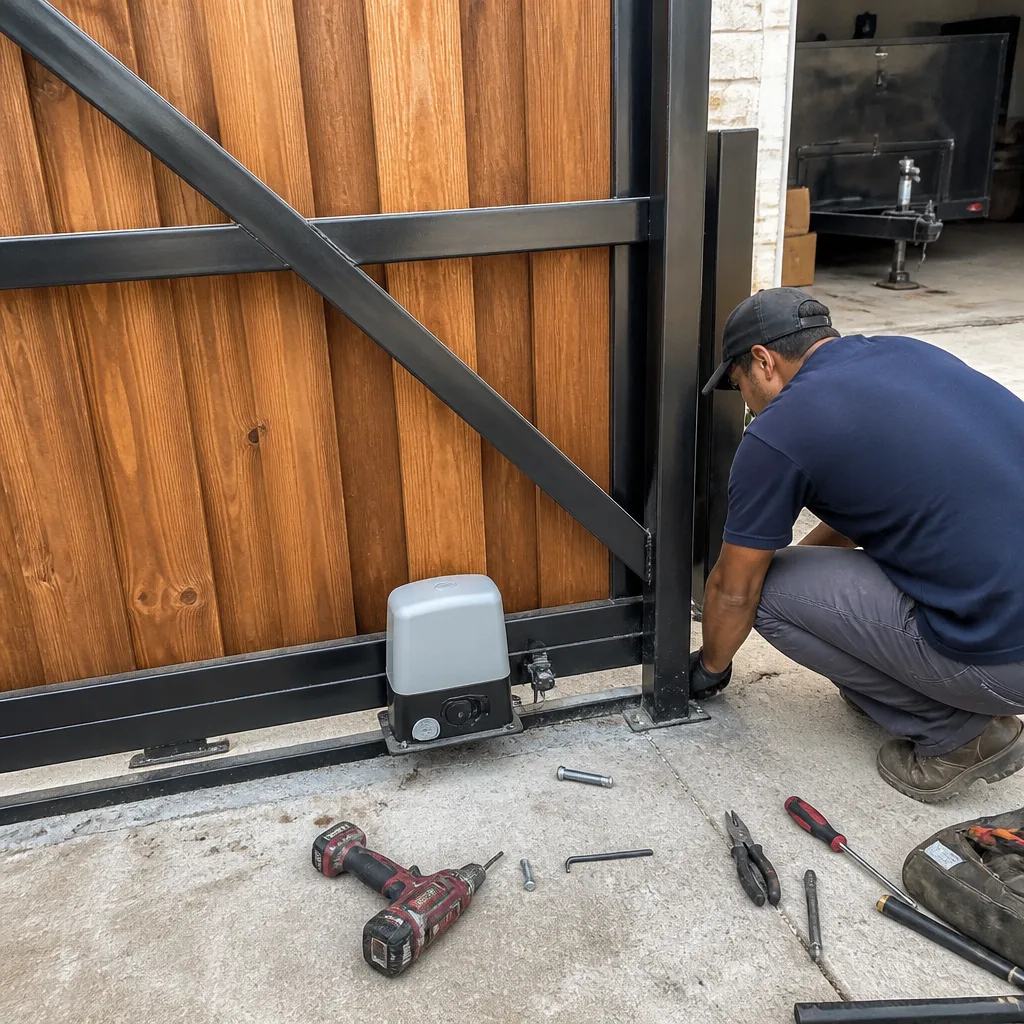
- A written scope of work stating what the technician found, what the root cause was, and what was done to correct it, in the trade’s own language (limit switch, torque setting, post shim, roller replacement).
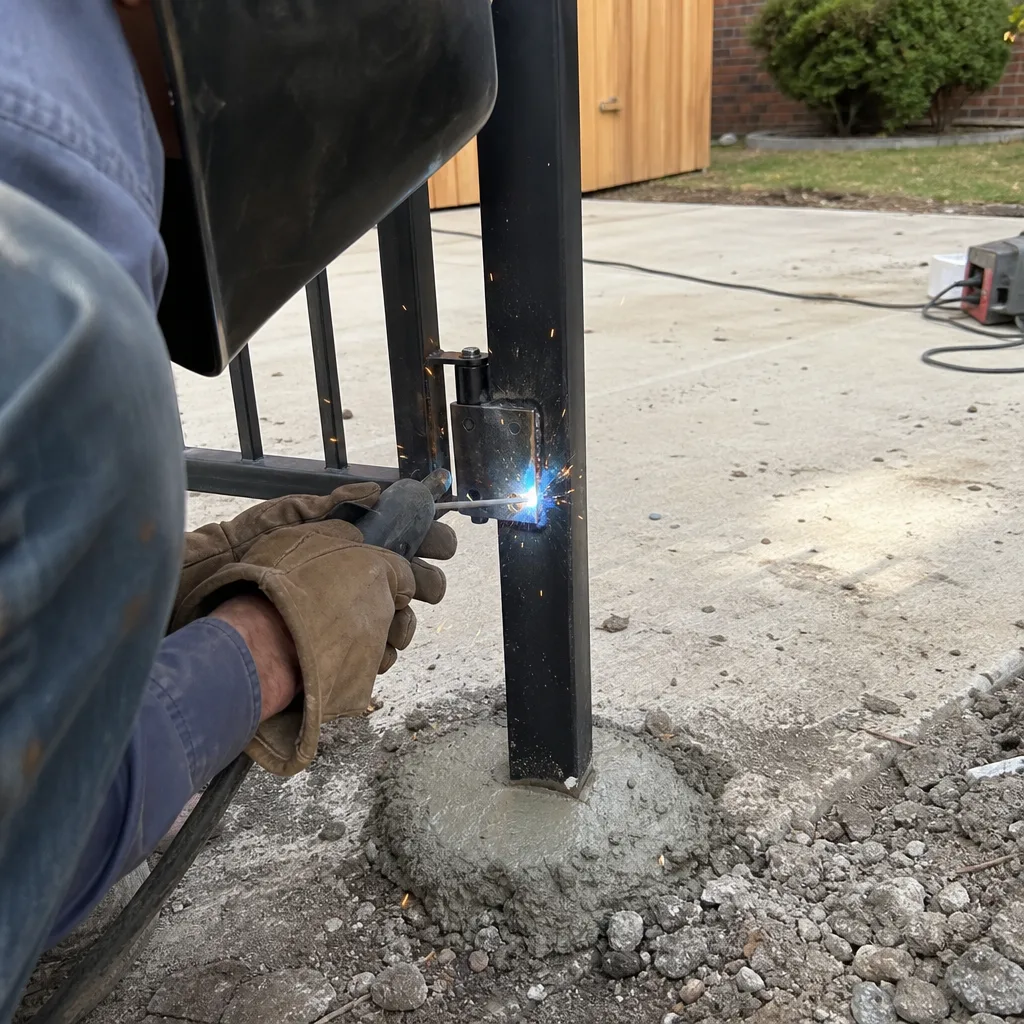
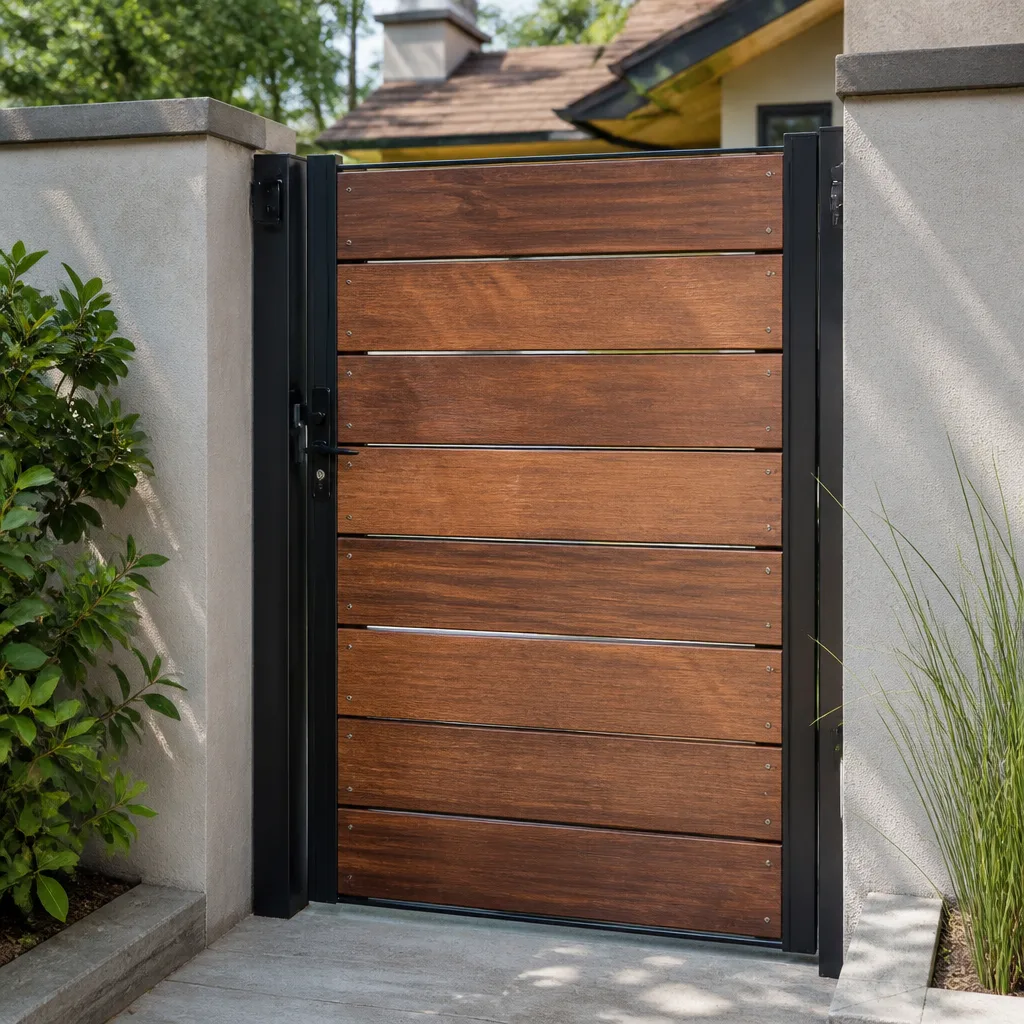
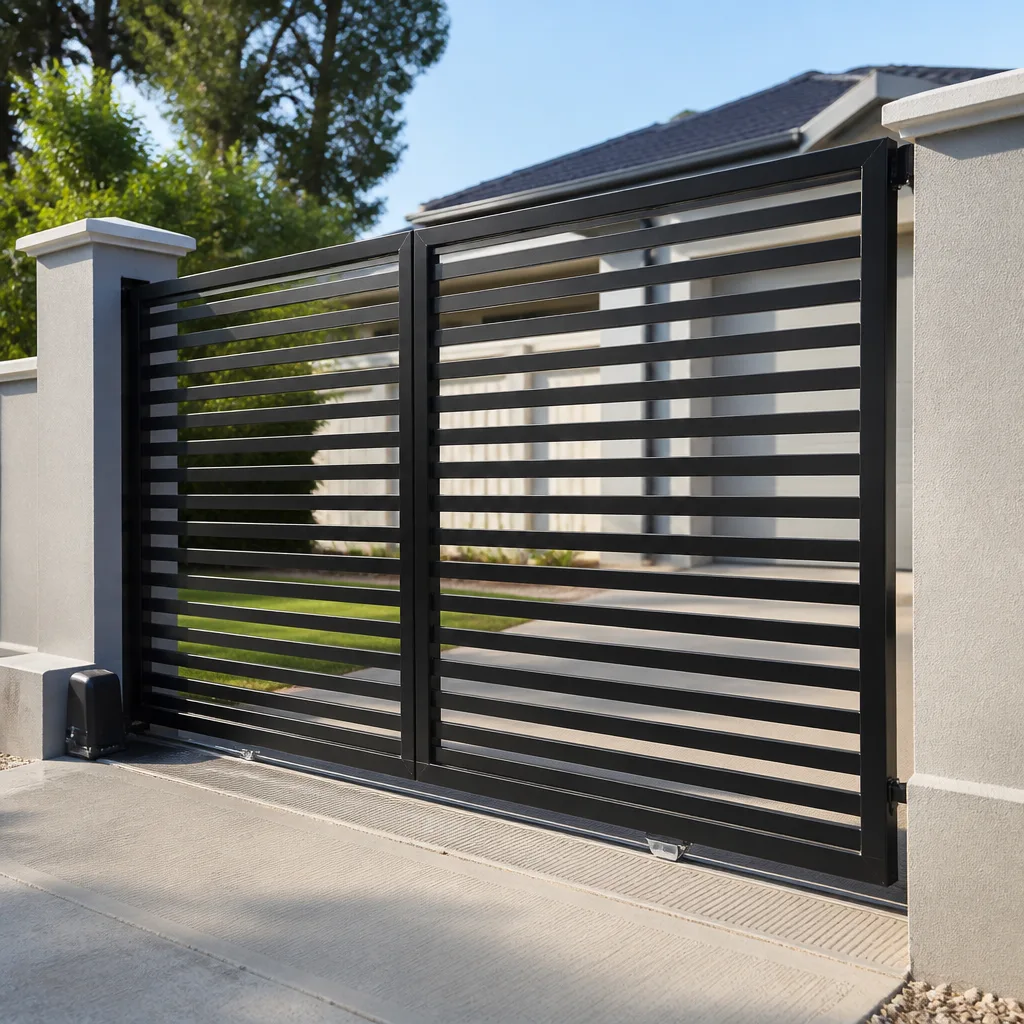
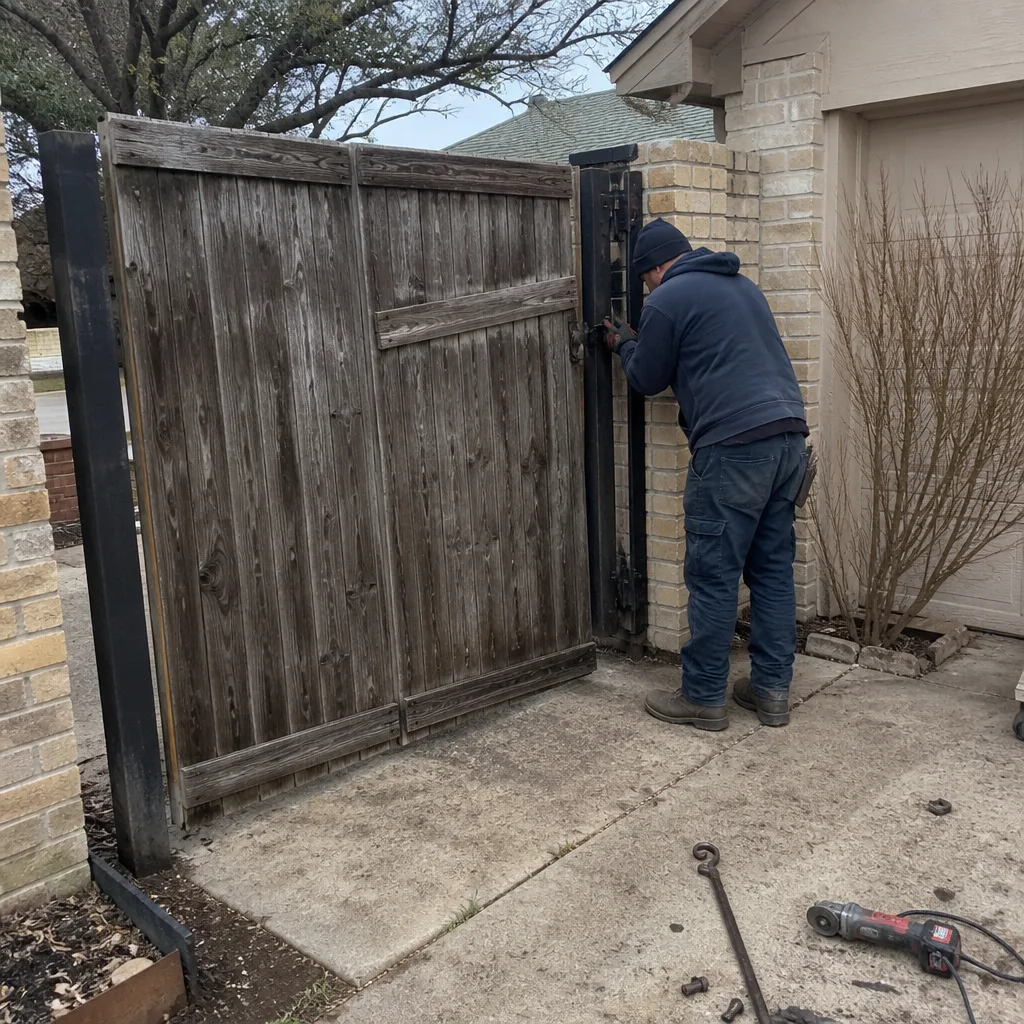
- Before and after photos of the failed component and the installed repair, taken from the same angle so the correction is visible.
- Operator readings – limit-switch positions, torque or force settings, and any tension or clearance measurements taken during the visit.
- Part numbers installed, including brand and model, so any future technician can look up the exact component without disassembling the gate.
- A basic wiring diagram for any electrical work, showing what connects where and what was changed.
This is the Haven Standard that Adrian Vance carried over from commercial access-control work starting in 2014, and it applies to every residential gate we touch. Clause 4 of the Haven Standard covers it: evidence on every job, at no additional charge.
How to Read a Written Scope of Work and Confirm a Root Cause
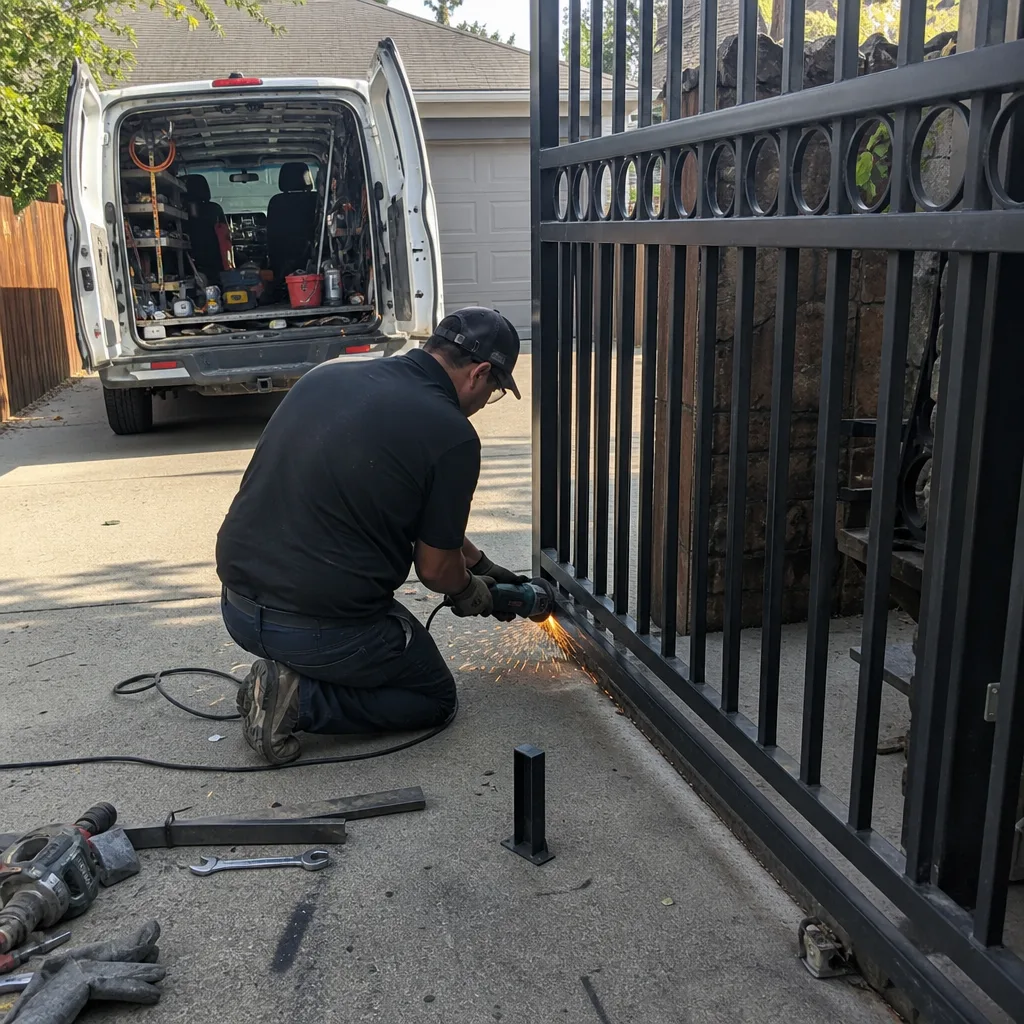
A written scope of work is only valuable if it identifies a root cause. “Replaced transformer” is a task. “Replaced transformer after confirming 24VAC control supply was dead due to water intrusion at the conduit fitting; sealed fitting and photographed new connection” is a root cause. The second sentence tells you the problem was not just the part, but the water entry that killed it.
When you receive a written quote in Dallas, read it with these checks:
- Does it name the failed component by its actual name? “Opener not working” is an observation, not a diagnosis. “Gear sprocket stripped on LiftMaster LA400, secondary arm bent” is a diagnosis.
- Does it state what the technician measured? Torque, limit position, voltage, clearance, post plumb – any number at all. No numbers means no measurement was taken.
- Does it explain why the failure happened? Heat, soil movement, water intrusion, undersized operator, wear. Without a mechanism, the repair is a guess.
- Does it list what will be installed, with part numbers? Vague language like “new motor kit” is not a part number. Specifics protect you in the future.
- Does the price match the scope? If the scope lists alignment, hinge repair, and a new operator, the price should reflect all three. If the scope lists only a new operator at a price that suggests a full repair, the alignment was not included – it was waved at.
We also recommend keeping your own record: the date, the technician’s name, the work performed, and the next service recommendation. That record plus our written scope gives the next technician – whoever they are – a complete starting point. The goal of every visit should be to make the next visit unnecessary, or if it is necessary, to make it faster and cheaper.
What Gate Repair Costs in Dallas
Gate repair pricing in Dallas reflects the labor market, the cost of automation parts, and the complexity of the gate. Most residential repairs fall into a predictable range, and there is no reason a company cannot put that range in writing before the work begins-see our Gate Repair Cost Breakdown: The Dallas Homeowner’s Reference for 2026 for typical ranges. Here is what we quote, on average, in the Dallas market:
- Service call and diagnosis: $85 to $125, often credited toward the repair if you proceed.
- Limit-switch adjustment or replacement: $120 to $240, depending on the operator model and whether the switch is internal or external.
- Photo-eye realignment or replacement: $95 to $180, including beam alignment verification.
- Hinge or latch adjustment on a swing gate: $150 to $300, including post-shim work if the soil has moved.
- Roller or V-track replacement on a slide gate: $180 to $450, depending on the number of rollers and the track length.
- Swing-gate operator replacement: $600 to $1,400 installed, depending on the brand (Linear, Ghost Controls, DoorKing, Viking) and whether the arm bracket must be rebuilt.
- Slide-gate operator replacement: $800 to $1,800 installed, including chain or belt tensioning.
- Full gate replacement: $2,800 to $8,500+, depending on material, size, and automation. See our Gate Installation in Dallas page for a detailed breakdown.
These are written prices, quoted before any work starts. The price you are handed is the price you pay. That is Clause 1 of the Haven Standard: have it in writing. No “call for a quote,” no surprise invoice at the end. If a Dallas gate company will not give you a written price before the job starts, that tells you something about how the job will end.
What You Can Check Yourself vs. What Needs a Technician
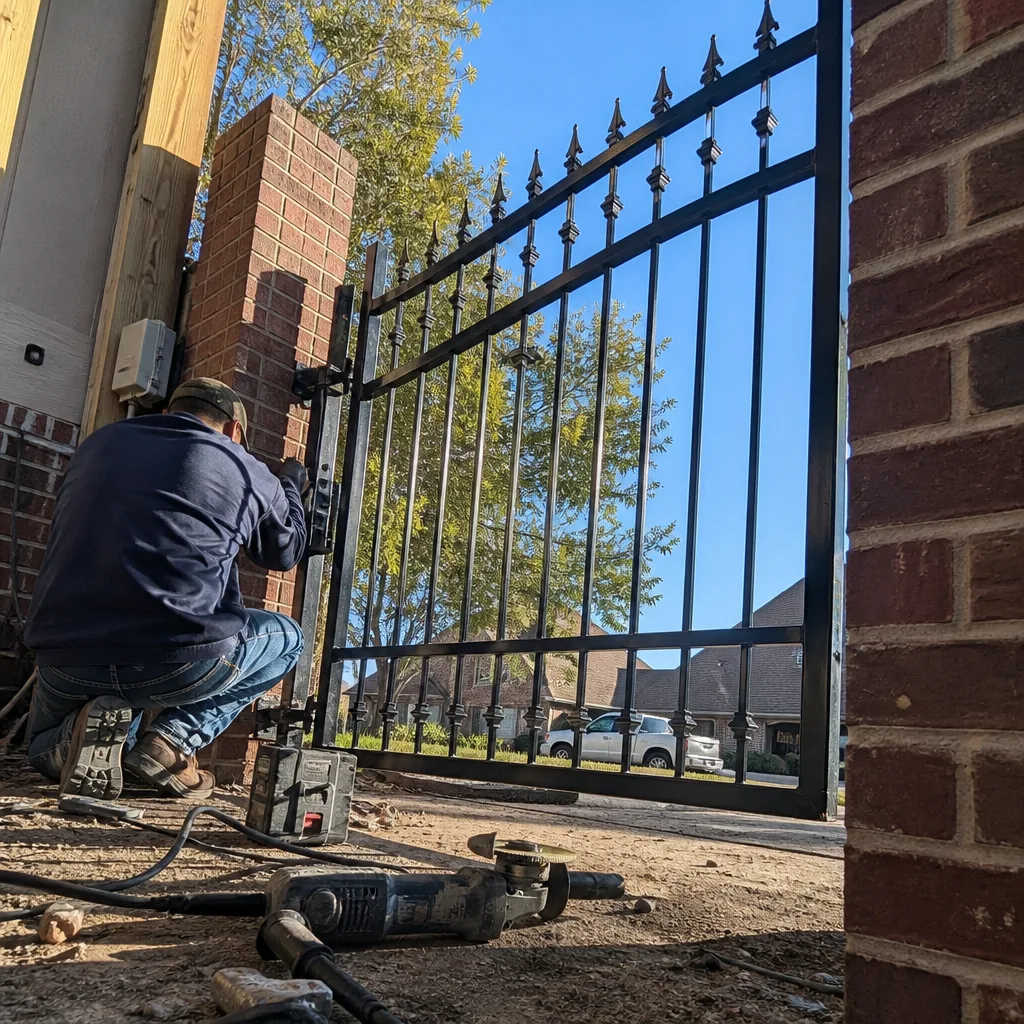
There are a few things a homeowner can safely observe before calling a gate repair company in Dallas, and there are things that require a trained professional. Knowing the line saves you money and keeps you safe.
Safe to check yourself:
- Debris in the slide-gate track. Rocks, mulch, and dirt are common in Dallas yards and cause binding. Sweep the track and run the gate again.
- Visible corrosion or damage on hinges, brackets, and the operator arm. Look for rust, cracks, or bolts that have worked loose.
- The photo-eye beam path. If weeds or a new planter pot crosses the beam path, the gate will refuse to close. Clear the path and try again.
- The operator’s power source. Check the breaker, the GFCI outlet, and any external disconnect switch before calling anyone out.
Do not attempt yourself: high-tension springs on a swing or slide gate, any electrical work inside the operator, any adjustment of a gate’s travel path that requires lifting or shimming the leaf, and any repair to a gate that operates near overhead power lines or public infrastructure. Gates are heavy. A 400-pound leaf under spring tension can cause serious injury or death if it releases unexpectedly. The same is true of the electrical inside an operator. The safest and cheapest move in Dallas is to call a technician who carries the right gear and can take the measurements safely.
Common Mistakes to Avoid
- Replacing the operator without fixing the alignment. In Dallas, soil movement is the most common root cause. A new motor on a misaligned gate fails early, and you pay twice.
- Accepting a verbal estimate. If the quote is not in writing, with the scope and the price, the number can change. Clause 1 of the Haven Standard exists for a reason.
- Ignoring the photo-eye. A misaligned photo-eye (the infrared beam that stops the gate if something crosses the path) can mimic a motor failure. It’s a $95 fix disguised as a $900 replacement.
- Not asking for the operator readings. Without limit and torque readings, the next technician has no reference point. You are paying for a re-diagnosis every single time.
- Treating all gate brands as interchangeable. LiftMaster, FAAC, BFT, Linear, Viking, Ghost Controls, DoorKing, Elite, and Mighty Mule all have different boards, switches, and failure patterns. A technician who works on one does not automatically know the others.
- Delaying a small repair until it becomes a big one. A dragging hinge or a worn roller is a $200 fix today and an $1,800 operator replacement in eight months when the motor burns out working against the resistance.
When to Call a Professional

Call a gate professional when the gate is binding, dragging, grinding, reversing unexpectedly, stopping mid-travel, or refusing to close on the first try. Call immediately if the gate strikes a vehicle, person, or pet, or if it operates erratically near a public sidewalk or street. Call if you hear a grinding noise, a repeated clicking, or a burning smell from the operator. Call if the gate’s remote works intermittently or the keypad stops responding. If any part of the gate is under spring tension or sits near overhead power lines, do not attempt the repair yourself. Vance Gate Repair Dallas offers free estimates in Dallas, call (469) 299-5902, and a trained technician with a written quote is on the way.
Frequently Asked Questions
Gate repair in Dallas typically runs between $120 and $850 depending on the failure, with operator replacement ranging from $600 to $1,800 installed. The exact price depends on the brand, the gate type, and whether alignment work is included. Call (469) 299-5902 for a written estimate at no cost.
Intermittent gate operation is usually a limit-switch drift, a photo-eye misalignment, or a loose wire connection. The most misdiagnosed of these is limit-switch drift, where the switch moves slightly each cycle until the gate stops short or over-travels. A technician should take limit readings and show you the numbers before quoting a repair.
A properly sized operator on a well-aligned Dallas gate should last 8 to 12 years. An undersized operator on a gate that drags due to clay-soil movement may fail in 2 to 4 years. If your gate has had two motor replacements in five years, the motor was likely undersized or the alignment was never corrected.
Yes. Vance Gate Repair Dallas runs repair and emergency calls seven days a week, and a live person answers the phone 24 hours a day. Same-day service is available for most repair calls. Call (469) 299-5902 and a named technician with a written quote is dispatched.
We service nine major gate-automation brands, including Linear, Viking, Ghost Controls, and DoorKing, plus LiftMaster, FAAC, BFT, Elite, and Mighty Mule. We repair the motor already on the property rather than steering you toward a replacement. If your operator is not on that list, call and ask; we’ll tell you directly whether we can repair it.
Yes. Every job at Vance Gate Repair Dallas starts with a written scope of work and a fixed price, handed to you before any tool comes out. The price you agree to is the price you pay. That is Clause 1 of the Haven Standard, and it applies to every job, every time.
A legitimate gate repair visit should include a written scope, before and after photos, limit and torque readings, part numbers installed, and a basic wiring diagram for any electrical work. If the visit produces none of that, the next technician will be diagnosing from zero, and you will pay for the same discovery twice.
Yes. The expansive clay soil in Dallas County moves with moisture, shifting gate posts by fractions of an inch over time. That movement causes misalignment, binding, and early operator failure. Any gate repair quote in Dallas should address post alignment if the gate is binding or dragging.
The Bottom Line
Gate repair in Dallas is a diagnosis problem more than a parts problem. The heat, the clay soil, and the tendency of the trade to leave no paper trail mean most repeat service calls are rediscovering what the last technician already found. The fix is to demand the evidence: a written scope, a written price, a photo record, and the operator reads. A gate that is aligned, properly sized, and documented will run for a decade. A gate that is patched and left undocumented will be back on the service schedule within two years. Call Vance Gate Repair Dallas at (469) 299-5902 for a free estimate, and ask for the paperwork. It is the one gate component that never fails.
Written by Adrian Vance, Owner at Vance Gate Repair Dallas, serving Dallas since 2014.